Latest Book

Latest Book
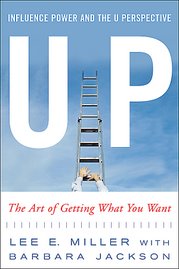
UP: Influence Power and the U Perspective-- The Art of Getting What You Want

Saturday, January 26, 2008

CAREER COACH


Think you deserve a raise? Here's how to ask for one

Sunday, January 13, 2008

If you're overdue for a salary increase, the way to get a raise is to know you deserve one and ask for it. When you are seeking a raise, you are not asking for a favor, you are conducting a business negotiation. Getting a raise means giving your boss a reason for wanting to help you get one.

If you are seeking a raise, follow the advice offered by Ron McMillan, co-author of "Crucial Conversations: Tools for Talking When Stakes Are High" (McGraw-Hill; 2002).

  • Don't ask for a raise unless you have done something to deserve one.
  • Determine what people doing similar work are earning elsewhere; information readily available on the Internet.
  • Show how you have gone above and beyond what was expected of you in terms of results, or how you have "added value" by taking on additional responsibilities.
  • Take job-related courses and learn new skills that can add value for your employer.
  • Time your request to coincide with the successful completion of a project or favorable financial results.
  • If you don't have a legitimate justification to support your request, create one. For example, offer to take on additional work if you are given a raise.
  • Make sure your boss recognizes the contributions you have made to her success -- not in a boastful way, but in a straightforward manner.
  • Demonstrate why you deserve a raise, remaining factual but explaining how you determined a higher salary is warranted. If your boss disagrees, ask him why. If possible, provide your supervisor with additional information to support your request, or ask what you have to do to be considered for a raise in the future.
  • Use the right words, couching your request as a good business decision.
  • -- Lee E. Miller is the author of "UP: Influence Power and the U Perspective- The Art of Getting What You Want" and co-founder of YourCareerDoctors.com, a Web site devoted to career success. During his more than 20-year career as a senior human resources executive, he has hired and promoted hundreds of employees. Send your career questions to Lee@YourCareerDoctors.com.

    Friday, January 25, 2008

    CAREER COACH

    Make your hard work visible when seeking a promotion

    Sunday, January 13, 2008

    Getting a promotion begins with "taking a good look at yourself and what you want," says Randy Siegel, author of "Engineer Your Career." Determine what makes you uniquely valuable and how you can best use that to help your organization, Siegel says, then take the initiative.

    One of Siegel's clients, a resource specialist for a New Jersey not-for-profit, who "did a little bit of everything," took some time to consider what she did well and what she really wanted to do.

    During an annual performance evaluation, she asked to be allowed to focus her efforts exclusively on fundraising, an important function in any not-for-profit. Not only was her boss receptive to the suggestion, she was promoted to the position of business developer and given a significant raise.

    More often than not, when people ask why they weren't selected for a particular promotion, the response is, "I didn't know you were interested."

    Most of us believe if we do a good job, our employer will reward us, but "that is simply not the case" Siegel says. "You need to speak out, talk about what you can do and promote your successes."

    Siegel offers these tips for getting the promotion you deserve:

  • Be certain your boss knows you want to be considered for a promotion.
  • Volunteer for high-visibility projects, so key people will notice your value.
  • Find out what you need to do to get promoted, then follow the advice you are given.
  • Keep your boss appraised of how you are following up on her advice and seek performance feedback.

  • Identify an individual being groomed for promotion and indicate you'd be interested in that job; then offer to train your replacement.
  • Without bragging, ensure people know about professional successes.
  • Consider a lateral move that will help you gain critical skills for a promotion.
  • Show enthusiasm for the job. The one who gets promoted is usually the one who shows they want it most.
  • If repeated efforts to seek a promotion are unsuccessful, seek a promotion with another organization.
  • Sometimes, however, the only way to get promoted is to indicate you are planning to leave.

    David Gammel, president of High Context Consulting in Salisbury, Md., once got a promotion because he went to the company's chief executive and told him he was moving to Europe. After David thanked the CEO for all the opportunities he had been given, the CEO asked, "What would keep you around?"

    Gammel responded he'd stick around if he was "put in charge of international." A few days later, his boss came by and told him he was now in charge of international issues for the organization.

    Telling your boss you plan to leave unless you are promoted is an extremely risky strategy. If you choose that approach, you had better have another job lined up; and be prepared to take it. There is an equally good chance that, rather than getting you promoted, this strategy will result in your being shown the door.

    -- A veteran human resources executive, Lee E. Miller is the author of "UP: Influence Power and the U Perspective -- The Art of Getting What You Want," and the co-founder of YourCareerDoctors.com, a Web site devoted to career success. Mail questions to Lee@YourCareerDoctors.com.


    Tuesday, January 22, 2008

    On-Ramping: Successfully Returning to Work After Take Time Off From Your Career

    CAREER COACH

    Sunday, January 20, 2008

    Kristen Lyle, an audit manager for KPMG, a national accounting firm with offices in New Jersey, left her field when her second child was born. After several years, she decided it was time to return to work. While Lyle had maintained her license, she never considered going back to work as an accountant. She hadn't stayed current with developments in her profession, and she assumed an accounting firm would not want to hire someone who had been away for several years.

    Lyle had come face to face with the twin demons that frequently haunt someone seeking to return to the work force: lack of confidence and lack of currency.

    When Lyle mentioned to a friend from her old firm she was considering changing careers, her friend spoke with a manager at KPMG and the firm hired her back, with the same title and responsibilities she had when she left. They also provided her with the training she needed to get up to speed, and have been supportive of her need to balance work and family.

    How difficult is it to return to work after taking time off for an extended period? The answer depends on whom you ask. It also depends on how you approach the task. It has become so commonplace for people to take time off from their careers there are terms to describe the process: off-ramping, which means taking a break in your career, and on-ramping, referring to returning to the work force.

    Illness, disability and ailing parents as well as family responsibilities can cause many of us to interrupt our careers. For those like Lyle seeking to on-ramp, many will find companies eager to employ them; others, though, will receive a frosty reception.

    For someone who has been out of the work force for a period of time, the unspoken question on every employer's mind is: What have you done while you were not working that is relevant to the job we are seeking to fill? Employers will want to assure themselves that, if hired, you will be able to contribute immediately.

    Courses taken at local universities or online can demonstrate you have remained interested and active in your profession. Classes that enable you to master new technologies are of particular interest to employers because of the value they place on staying current with rapidly evolving technology. Remaining active in professional organizations and reading professional journals similarly will be looked on favorably. Volunteer work also is an excellent means for someone taking time off to develop new skills and to maintain existing ones.

    Here are some other tips for easing the transition:

    • Don't apologize for taking time off, but express enthusiasm for your decision to return to work now. Focus on the skills you bring to the job, the quality of your past experience and what you have done while you were not working that has enhanced your existing skills and helped you develop new ones.
    • Tell everyone you know and everyone whom you have previously worked with you are interested in returning to work and describe the type of job you are seeking. You are most likely to find a job through someone you know.
    • Consider easing your way back into the work force with part-time or temporary jobs. These jobs will allow you to re-familiarize yourself with the industry and update your skills. You also could start your own business from home. That could turn into a full-time occupation, or it could serve as a jumping-off point to re-enter the work force.

    The notion that a person will spend their whole career with a single company moving up the career ladder seems as anachronistic today as the local malt shops we see on TV Land reruns.

    Many of us will find ourselves taking time off from our careers for a variety of reasons. A little planning will go a long way toward ensuring your time off is little more than a short detour on your way to a fulfilling career. Never assume an employer won't want to hire you or won't be willing to accommodate your needs.

    A veteran human resources executive, Lee E. Miller is the author of "UP: Influence Power and the U Perspective -- The Art of Getting What You Want," and the co-founder of YourCareerDoctors.com, a Web site devoted to career success. Mail questions to Lee@YourCareerDoctors.com.

    Sunday, January 20, 2008

    Pump Up Your Career: Networking Can open All The Right Doors

    Allison Brinkman, an account manager with Eisen Management Group, a mid-size Cincinnati public relations firm, credits TV talk show host David Letterman with getting her a new job. When she graduated from college, Brinkman faced the challenge of finding her first job. Asked during a job interview what she could bring to the company, she responded with a prepared Letterman-style Top 10 list, ending with the No. 1 reason for hiring her: that "she wouldn't stop bugging him until he gave her the job." That tenacious approach got Brinkman hired.

    Employers are too busy to waste their time interviewing unqualified candidates. What gets someone hired is that they are more likable, fit in better with the corporate culture, wow the interviewer with some particular success or simply focus more on what is important to the person making the hiring decision.

    Before you can bowl over the interviewer, however, you have to get in the door. Most people miss out on great jobs because they are never even in the running for those positions. It is unlikely you are going to get your next job by posting your résumé on the Internet or searching the job boards.

    According to the United States Department of Labor, less than 10 percent of job seekers find employment by replying to Internet postings. Moreover, the job you really want is unlikely to be posted on the Internet.

    The best way to find a good job is still through the people you know, says Paula Marks, an executive recruiter at Gilbert Tweed Associates, a national executive search firm with offices in New Jersey. The key to finding a new job is networking, she says. "Networking should begin in utero," she adds jokingly.

    The people you know are the ones who will alert you to that great job, and will introduce you to people in a position to hire you. The more people you know, and the more people who think highly of you, the more likely those things will happen.

    Neil Gussman, Communications Manager at the Chemical Heritage Foundation in Philadelphia, got his last three jobs through the network of sales representatives he has dealt with over the years. “Sales representatives know which companies are hiring and where the best places to work are. They have to be in the know to be good at their job," Gussman says.

    Networking is not just for people to whom meeting others comes naturally. Anyone can learn to network. Nancy Ancowitz, a business communication coach and creator of Self-Promotion for Introverts, a program designed to teach shy individuals how to promote their careers and their businesses, advises people to build their network by joining professional organizations, heading committees, volunteering, hosting events and writing articles on topics of interest in trade magazines and on the Internet. Instead of collecting business cards at networking events, she suggests "focusing on making one or two strong connections with people of interest to you."

    "Give to your network without worrying about what you are going to get back," she suggests. Introduce people even if you've just recently met them, and tell them something they may have in common -- "I understand you're both big Nets fans." You'll be viewed as a connector, which will make people want to stay in touch with you. Most importantly, "don't wait until you need a job to begin networking," Ancowitz says. "Build relationships, and be generous with people in your circle throughout your career. That way when you need them people will be there for you."

    Never underestimate the power of building relationships and being likable when it comes to getting a job. Eva Rosenberg, an accountant and the author of "Small Business Taxes Made Easy" (McGraw Hill; 2004), got her first job as an executive recruiter despite having to win over a boss who had never hired a female recruiter before, and who did not want to pay her what she was seeking. Rosenberg's persistence, likeability and positive attitude finally got her an interview. Although her prospective boss was not initially inclined to hire her, she got the job by making a deal with him. She bet him she could close one placement before the end of her first month. If not, she agreed she would leave and pay him back her first month's salary. At the end of the first month, she had made not one, but two placements, and the job was hers.

    Lee E. Miller is the author of "UP: Influence Power and the U Perspective- The Art of Getting What You Want" and co-founder of YourCareerDoctors.com, a Web site devoted to career success. During his more than 20-year career as a senior human resources executive, he has hired and promoted hundreds of employees. Send your career questions to Lee@YourCareerDoctors.com

    Sunday, November 4, 2007

    What is the U Perspective and Why Do You Care


    Someone's U Perspective is how they see the world-- what they care about. Their U Perspective will inform the way an individual sees a particular situation and how they are likely to respond to it. How someone else views what is going on may be very different from how you see it.

    There are specific techniques that can help you determine someone's U Perspective. Once you take the time and effort to understand someone, you can determine what motivates them generally and what will motivate them under the circumstances. That might be money, friendship, status, helping others or any of a number of other motivators. That allows you not only to predict what they are likely to do, but also to affect their behavior.

    If you correctly understand someone's U Perspective and operate from it in a non-judgmental way, you will be in sync with what they are thinking and therefore will be able to influence their actions. Their point of view - their U Perspective - lets you know what they need and want. If you can provide that to them in a way that suits my needs as well, I can create a mutually beneficial solution. In negotiating or sales terms, this is a win/win solution. In leadership terms it is how you gain buy-in from your employees. In reality it is more powerful than either of these concepts. Everyone’s values are respected and solutions are found that are expressly suited to each individual’s wants and needs.

    This is especially true in terms of how a prospective boss see a candidate. If you understand their U Perspective you know which of your skills and experience to emphasize when you are being interviewed. Hiring manager's are typically motivated by the need to solve the most immediate challenges they are confronting. If you can show someone how you can help them solve the problems that are keeping them awake at night, you are well on your way to getting the job or the promotion you seek.

    Sunday, September 16, 2007

    The Ten Commandments of Employment Negotiations

    Here are 10 basic rules when negotiating compensation, the “Ten Commandments of Employment Negotiations,” to help you get the best possible deal when changing jobs, whether internally or with a new company excerpted from Get More Money On Your Next Job. They are:

    1. Be prepared. The more you know about the job market and about your prospective employer, the better you will negotiate. Information is readily available on the Internet, at the library, from professional associations and through networking. Time spent learning how to negotiate is time well spent and will pay dividends throughout your career. Proper preparation enables you to know what is possible and to get what you want. This is the first commandment because it's the most important thing you do as a negotiator.

    2. Recognize that employment negotiations are unique. While you want to negotiate the best possible deal, you need to do so in a way that doesn't damage your relationship with your future employer. At the same time, the employer's primary concern isn't negotiating the least expensive compensation package it can get away with. Keep in mind that your future employer wants you to accept the position and feel good about doing so. Remember that when the negotiations are over, you'll have to work with the person with whom you are negotiating.

    3. Understand your needs and those of your prospective employer. Employment negotiations are about priorities- yours and the employer’s. What is important to you? Are you to accept a low salary in return for a large equity stake? Are you able to handle dramatic swings in income from year to year? Understanding your needs will also help you select the type of company you want to work for. While a family-owned business may be unwilling to offer equity or ownership to a non-family member, may be willing to offer a large bonus based on results. A start-up company, in contrast, may not be able to offer a market-rate salary, but will typically offer stock options. By recognizing what an employer is most willing to do, you'll be able to determine what trade offs are possible to maximize what you get.

    4. Understand the dynamics of the particular negotiations. Sometimes you'll have skills that are in great demand. At other times, you may be one of many qualified candidates each of whom the company would be happy to hire. Sizing up the situation and understanding the relative bargaining position of each party will help you determine when to press your advantage and when to back off.

    5. Never lie, but use the truth to your advantage. It is not only wrong to lie, but in employment negotiations, it's ineffective. If you lie during negotiations, sooner or later you are likely to get caught. Then, even if the employer doesn’t withdraw the offer, you'll be at a tremendous disadvantage, and your credibility will be forever damaged. On the other hand, total candor won't be rewarded. You're under no obligation to blurt out everything you know. You can determine what you want to say and how you want to say it, placing everything in its most favorable light. One key aspect of your preparation is recognizing potential problems so you can determine, ahead of time, how you will handle them when they inevitably come up.

    6. Understand the role fairness plays in the process. Appeals to fairness can be an extremely powerful weapon. The guiding principle for most employers when they negotiate is fairness. Within the constraints of their budget and organizational structure, employers usually will agree to anything that's fair and reasonable. So be able to justify every request you make in terms of fairness. Understanding the role that fairness plays in employment negotiations can mean the difference between success and failure.

    7. Use uncertainty to your advantage. The more information you convey to a potential employer about your bottom line, the more likely it will limit what you get. Employers typically ask what it will take for you to accept the position, before they make you an offer. With that information, a prospective employer can determine the minimum package it needs to offer. While an employer may not offer you as little as it can get away with, divulging too much information will likely result in a lower offer. By not disclosing your exact compensation or what it would take to get you to accept the position, you force a potential employer to make its best offer. When dealing with a recruiter, however, you may need to provide more detailed salary information. If you do, though, present that information in the most advantageous way.

    8. Be creative. Consider the value of the total package. Look for different ways to achieve your goals. Be willing to make tradeoffs that increase the total value of the deal. By being creative, you can package what you want in ways that will be acceptable to the company. You'll also be able to find creative "trades" that allow you to withdraw requests that might be problematic to the company in return for improvements in areas where the company has more flexibility.

    9. Focus on your goals, not on winning. Too often in negotiations, winning becomes more important than achieving your goals. It's important not to make your future boss feel as if he's lost in the negotiations. You'll have gained little by negotiating a good deal if you alienate your future boss in the process.

    10. Know when to quit bargaining. The one sure way to lose everything you've gained through your negotiating efforts is to be greedy. There comes a point in every negotiation when you've achieved everything you could have reasonably expected to achieve. While most companies will want to treat you fairly and make you happy, few companies want to hire a prima donna. Being perceived as greedy or unreasonable may cause the deal to fall apart. Even if it doesn't, you'll have done immeasurable harm to your career.

    This brings us to the Eleventh commandment:
    11. Never forget that employment is an ongoing relationship. Job negotiations are the starting point for your career with a company. Get too little and you're disadvantaged throughout your career there; push too hard and you can sour the relationship before it begins.

    Understanding these principles will allow you to effectively negotiate the terms of your new job in good times and in bad. Once you are hired, do a good job and continually seek out new challenges. As you take on added responsibilities and learn new skills, there will be opportunities to negotiate further improvements.
    Tuesday, September 4, 2007

    Motivating People Is About Recognizing What They Care About


    Looking for a promotion? Need help from your colleagues? Want you boss to give you additional resources for that project you are working on? You have to start by asking, but understanding how to ask will make all the difference between getting what you want and going away empty handed. How you should ask depends on what motivates the person you are asking- what I refer to as their "U Perspective" in my most recent book UP: Influence Power and othe U Perspective-The Art of Getting What You Want .

    Most people simply assume that everyone is motivated in the same way that they are. Even when we recognize that someone else might see a situation differently than we do, our first instinct usually is to try to persuade them to see things our way. The U Perspective takes the opposite approach. Its effectiveness is not rooted in the ability to convince others to change their views or adopt different values. Instead, its power comes from recognizing what others already believe and want and motivating them to help you achieve your objectives based on that information. The U Perspective allows you to get what you want by working with another person’s belief system, not challenging it. To achieve this level of understanding, you need to discover how the person you are trying to influence perceives a situation and what is important to him or her -- to learn to see things through their eyes. Once you understand how they see a situation you have the ability to construct, and present options in a way that more effectively influences what they do.

    We think money will motivate people to do just about anything. While that may true it takes an awful lot of money to get people to do certain things and there are some things that even a lot of money may not get certain individuals to do. More importantly, sometimes money is not the best motivator.

    Computer scientists have used an understanding of what certain web users value to literally get them to do work that no one else wants to do and to do it for free. Impossible. Not if you understand the concept of the U Perspective. One of the most boring tasks I can think of is labeling images to enable online searching. This is a task computers can not yet do; so it requires viewers to look at the images and assign them key words that identify them. How much would you expect to be paid to do that work? Louis Van Ahn, a professor at Carnegie MellonUniversity, has figured out how to get people to do it for free. He simply turned it into a game. The game connects random players who log in to the website. Each is shown the same picture for which they type in keywords. When the words match they are awarded points. People return to the website frequently and have been known to play for hours.

    When it comes to getting a new job, a promotion or a raise, understanding what the decision-maker cares about is critical to success. If you show how what you are asking for will further some goal they care about, you will likely get what you want. If you can help your boss or prospective boss look good or accomplish an important objective you are likely to win the new job, promotion or raise that you are seeking.