Latest Book

Latest Book
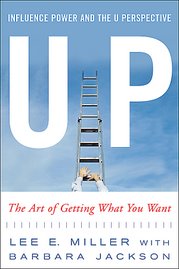
UP: Influence Power and the U Perspective-- The Art of Getting What You Want
Showing posts with label New Job. Show all posts

Sunday, January 20, 2008

Pump Up Your Career: Networking Can open All The Right Doors

Allison Brinkman, an account manager with Eisen Management Group, a mid-size Cincinnati public relations firm, credits TV talk show host David Letterman with getting her a new job. When she graduated from college, Brinkman faced the challenge of finding her first job. Asked during a job interview what she could bring to the company, she responded with a prepared Letterman-style Top 10 list, ending with the No. 1 reason for hiring her: that "she wouldn't stop bugging him until he gave her the job." That tenacious approach got Brinkman hired.

Employers are too busy to waste their time interviewing unqualified candidates. What gets someone hired is that they are more likable, fit in better with the corporate culture, wow the interviewer with some particular success or simply focus more on what is important to the person making the hiring decision.

Before you can bowl over the interviewer, however, you have to get in the door. Most people miss out on great jobs because they are never even in the running for those positions. It is unlikely you are going to get your next job by posting your résumé on the Internet or searching the job boards.

According to the United States Department of Labor, less than 10 percent of job seekers find employment by replying to Internet postings. Moreover, the job you really want is unlikely to be posted on the Internet.

The best way to find a good job is still through the people you know, says Paula Marks, an executive recruiter at Gilbert Tweed Associates, a national executive search firm with offices in New Jersey. The key to finding a new job is networking, she says. "Networking should begin in utero," she adds jokingly.

The people you know are the ones who will alert you to that great job, and will introduce you to people in a position to hire you. The more people you know, and the more people who think highly of you, the more likely those things will happen.

Neil Gussman, Communications Manager at the Chemical Heritage Foundation in Philadelphia, got his last three jobs through the network of sales representatives he has dealt with over the years. “Sales representatives know which companies are hiring and where the best places to work are. They have to be in the know to be good at their job," Gussman says.

Networking is not just for people to whom meeting others comes naturally. Anyone can learn to network. Nancy Ancowitz, a business communication coach and creator of Self-Promotion for Introverts, a program designed to teach shy individuals how to promote their careers and their businesses, advises people to build their network by joining professional organizations, heading committees, volunteering, hosting events and writing articles on topics of interest in trade magazines and on the Internet. Instead of collecting business cards at networking events, she suggests "focusing on making one or two strong connections with people of interest to you."

"Give to your network without worrying about what you are going to get back," she suggests. Introduce people even if you've just recently met them, and tell them something they may have in common -- "I understand you're both big Nets fans." You'll be viewed as a connector, which will make people want to stay in touch with you. Most importantly, "don't wait until you need a job to begin networking," Ancowitz says. "Build relationships, and be generous with people in your circle throughout your career. That way when you need them people will be there for you."

Never underestimate the power of building relationships and being likable when it comes to getting a job. Eva Rosenberg, an accountant and the author of "Small Business Taxes Made Easy" (McGraw Hill; 2004), got her first job as an executive recruiter despite having to win over a boss who had never hired a female recruiter before, and who did not want to pay her what she was seeking. Rosenberg's persistence, likeability and positive attitude finally got her an interview. Although her prospective boss was not initially inclined to hire her, she got the job by making a deal with him. She bet him she could close one placement before the end of her first month. If not, she agreed she would leave and pay him back her first month's salary. At the end of the first month, she had made not one, but two placements, and the job was hers.

Lee E. Miller is the author of "UP: Influence Power and the U Perspective- The Art of Getting What You Want" and co-founder of YourCareerDoctors.com, a Web site devoted to career success. During his more than 20-year career as a senior human resources executive, he has hired and promoted hundreds of employees. Send your career questions to Lee@YourCareerDoctors.com

Sunday, November 4, 2007

What is the U Perspective and Why Do You Care


Someone's U Perspective is how they see the world-- what they care about. Their U Perspective will inform the way an individual sees a particular situation and how they are likely to respond to it. How someone else views what is going on may be very different from how you see it.

There are specific techniques that can help you determine someone's U Perspective. Once you take the time and effort to understand someone, you can determine what motivates them generally and what will motivate them under the circumstances. That might be money, friendship, status, helping others or any of a number of other motivators. That allows you not only to predict what they are likely to do, but also to affect their behavior.

If you correctly understand someone's U Perspective and operate from it in a non-judgmental way, you will be in sync with what they are thinking and therefore will be able to influence their actions. Their point of view - their U Perspective - lets you know what they need and want. If you can provide that to them in a way that suits my needs as well, I can create a mutually beneficial solution. In negotiating or sales terms, this is a win/win solution. In leadership terms it is how you gain buy-in from your employees. In reality it is more powerful than either of these concepts. Everyone’s values are respected and solutions are found that are expressly suited to each individual’s wants and needs.

This is especially true in terms of how a prospective boss see a candidate. If you understand their U Perspective you know which of your skills and experience to emphasize when you are being interviewed. Hiring manager's are typically motivated by the need to solve the most immediate challenges they are confronting. If you can show someone how you can help them solve the problems that are keeping them awake at night, you are well on your way to getting the job or the promotion you seek.