Latest Book

Latest Book
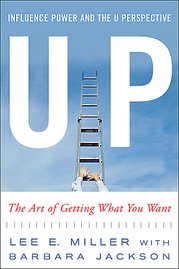
UP: Influence Power and the U Perspective-- The Art of Getting What You Want
Showing posts with label Jobs. Show all posts

Sunday, February 15, 2009

The Do's for Staying in the Workforce

While I remain optimistic that the economic picture will begin to brighten soon, the economic news continues to be grim. First time jobless claims are up again, although less than last month, and the national unemployment rate is 8.5%. So if you are currently employed, it makes sense to take steps to increase the likelihood that you will continue to be employed.

During my 20-plus years as a senior human resources executive, I have been involved in numerous layoffs. The process used to determine who stays and who goes is anything but an exact science. While some choices are obvious, many are not. There are three basic criteria used to determine who is terminated: 1) the importance of the job functions an individual performs, 2) the quality of an individual's work, and 3) whether the people making the termination decisions know and like you. There are things that you can do to increase the likelihood that you will survive a downsizing.

If you want to increase the importance of the work you are doing, focus on those aspects of your job that are most important to your boss and to the organization. Volunteer to help out on key projects. Attend and actively contribute at meetings where those projects are being discussed. Anything that makes your boss look good to his or her superiors is important work in your boss' eyes. And try to find ways to make or save money. Especially in tough times, rarely do companies fire someone who is putting money in their pocket. As to the quality of your work, while it may be difficult to quickly improve your performance, you can show that you are working hard. Come to work early, stay late, demonstrate a mastery of the details of the projects you are working on, and be sure to let your boss and other decision-makers know about your successes.

Of the three criteria, however, getting the people who will decide your fate, starting with your boss, to know and like you is the one thing that many employees frequently ignore, to their detriment. According to Stephen Viscusi, author of Bulletproof Your Job, "If your boss knows you, likes you, has a good impression of you, you're much less likely to be fired than someone who doesn't enjoy that relationship with the boss." When it comes to developing that kind of connection with your boss, Viscusi offers the following admonitions:

  • Be Visible: "Introduce yourself." People tend to shy away from interacting with managers outside of their immediate team. But if you look for opportunities to introduce yourself to the "big bosses" at conferences or company meetings, for example, you broaden your exposure. The more "higher ups that know you and have a favorable impression of you, the less likely you are to get fired."

  • Be Easy: Don't be viewed as a high-maintenance employee. Managers use layoffs as an opportunity to get rid of the gripers and malcontents. By the same token, they look to retain employees whom they have come to depend on. Do what you say you're going to do every single time. No excuses, no buck passing, no dog ate your homework, no computer crashes. If your boss knows without a doubt that he can depend on you day to day, as well as in an emergency, you will avoid the pink slip.

  • Be Useful: The more of a role you play in the important work that gets done at the company, the more indispensable you are to your boss. Show initiative and don't be afraid to volunteer for tasks that are viewed as important by your boss and the organization.

  • Be Ready: Preparation is the key to success. Be prepared for whatever might happen. Building a network before you need one by helping others will ensure that help is available for you if and when you need it. Being prepared will help you project confidence in the value you bring to the organization. "Confidence is very attractive. It makes you seem more capable, more valuable and more of a keeper when layoff decisions are being made."

Hopefully the rash of layoffs we are currently experiencing will soon be a thing of the past. Knowing how to position yourself at work so that what you do is appreciated by your boss and others in positions of authority however, is a skill that will be invaluable to you throughout your career.


A veteran human resources executive, Lee E. Miller is a career coach, an author of Get More Money On Your Next Job... In Any Economy and the co-founder of YourCareerDoctors.com. Mail your questions to Lee@YourCareerDoctors.com


Sunday, February 1, 2009

Contacts, Not Web, Key to Getting a Job


Sunday, January 18, 2009

After leaving her job and enduring months of chemotherapy for Hodgkin's lymphoma, Ellie Mroz of Fanwood decided to re-enter the job market. She spent countless hours at her computer, clicking from job site to job site. She felt like she was "burying herself in opportunities -- none of which seemed to want her."

Once she decided to get out from behind the keyboard, she quickly found a job. Greg Redington, her boss, had tried to recruit her husband. Although her husband declined the offer, she and Redington had an opportunity to meet and really hit it off. That chance meeting led to him offering Mroz a job.

Although Redington didn't have enough work to keep her busy full time in his construction business, having heard her talk about her recent bout with cancer, he decided that in addition to business development, she could help him do something he had always wanted to do: start a nonprofit cancer foundation. Mroz not only quickly found a job in her hometown, but also gained the satisfaction of helping launch One Year for Cancer.

With the proliferation of job boards, it is tempting to think that all you need to do to find employment is log on to your computer, click and apply. While it makes sense to spend some time applying for jobs online, most people don't find their jobs that way. According to a 2008 survey conducted by ExecuNet, only about 25 percent of jobs are found by applying online, while almost 70 percent are found through networking.

If you want to find a job quickly, reach out to the people who know you. Liz Lynch, author of "Smart Networking: Attract a Following In Person and Online" suggests "reconnecting with former bosses, co-workers and classmates, in person, as well as going to events to meet new people in the industry you want to be in."

In order to make the most of the events you attend, Lynch advises you "develop a clear job objective statement that you can use as your 'elevator pitch' when you meet people at networking events. In a couple of sentences, describe what you're good at and what type of job you are seeking."

Print up your own business cards. You need something to hand out with your contact information when you go to networking events and meetings. You can get business cards made up at any copy store or order them online.

The internet also can be used to facilitate in-person networking. Social networking sites such as Facebook.com and LinkedIn.com enable you to locate people you have lost touch with. Once you find them, pick up the phone and call. Try to get a face-to-face meeting. Offer to meet for a cup of coffee or a meal. Pick a place near where they live or work so it is convenient for them. It is hard to make a personal connection with someone if your only contact is by e-mail. People are more willing to help you if you have met with them.

You can use the internet to identify people you know who work at a company of interest or who know someone who does. Rather than applying for a job online and risking having your résumé lost among hundreds of other applications, search your online networks for a connection who works at the company. See if they can ask someone to walk your résumé down to the human resources department or, better yet, to the hiring manager directly. That will help you stand out from online applicants and ensure your application gets a thorough review.

The internet also allows you to gather information about someone you are going to meet. What you learn online will enable you to quickly build rapport when you actually meet. Understanding the background of the people you will be meeting will let you tailor your answers to what each individual cares about.

Be sure to thank everyone who helps you in any way. People appreciate being acknowledged, and they are more likely to help you in the future if you show your appreciation.

A veteran human resources executive, Lee E. Miller is the author of "UP: Influence Power and the U Perspective -- The Art of Getting What You Want," and the co-founder of YourCareerDoctors.com, a website devoted to career success. Mail questions to Lee@YourCareerDoctors.com.

Saturday, December 6, 2008

In a Bleak Market, Bright Spots Loom

Sunday, November 16, 2008

According to the United States Department of Labor the unemployment rate rose to 6.5 percent, from 6.1 percent in October -- a 14-year high.

Since the beginning of the year, employment has fallen by 1.2 million nationally, with more than half of the decrease occurring in the past three months. New Jersey was not immune to this national trend, shedding thousands of jobs over the past year with further job losses anticipated.
The employment picture is not all bad news however. For people with a college degree, although unemployment is rising, it remains at a relatively low 3.1 percent. There are jobs to be had for people who know where to look and how to sell themselves.

If you are looking to move, consider Texas, because more than 50 percent of the new jobs this year were created there. While overall, New Jersey shed jobs, there were some bright spots locally. Jobs grew in the areas of transportation and warehousing, information and technology, professional services, education and health care, according to the state's Department of Labor.
According to Rob McGovern, chief executive of Jobfox.com, a next-generation career website that matches users to appropriate job openings, here are a few of the jobs that top their internet hiring list for New Jersey and New York:

  • Sales representative/business development
  • Market research
  • Administrative assistant
  • Accounting staff
  • Medical administrative services
  • Software design/development
  • Networking/system administration

When you are looking for a job, don't limit yourself to looking for a job exactly like the one you just left. Examine your skills and see how they might be valuable in the industries that are going to grow over the next several years. Here are the top five areas where experts expect job growth:

The federal government The Office of Personnel Management is hiring, and anticipates filling 100,000 new jobs next year. That estimate was made before the election and will likely prove to be low. If you are an unemployed mortgage lender or have just been laid off from Wall Street, for example, keep your eye on opportunities that will arise as a result of the Troubled Assets Relief Program. (That is the $700 billion bailout program that is using our taxes rescue the financial services sector.)

Clean and green technology President-elect Obama has said his No. 1 priority is to create a new energy economy. He has promised $150 billion for a green energy program. Lots of engineers, scientist, technicians and researchers are going to be needed for the development and manufacturing of renewal energy.

But you don't have to be an engineer to go green. Project managers and construction workers are also going to be needed. After all, somebody has to build those wind turbines. There will also be a need for marketers and salespeople to sell all that green technology.

Health care We are all getting older. The one area that grew in almost every state this year was health care. Nurses, physician's assistants, home health care workers and information technology workers of all types to modernize heath care systems are, and will continue to be, in demand.

Education There is a teacher shortage with waves of teacher retirements on the horizon. Some states offer alternative certification programs that will allow you to become a teacher even if your college degree is not in education.

Compliance Government regulation is only going to grow over the next few years. There is already a shortage of accountants. We are going to continue to see growth in the demand for accounting services, bookkeepers and compliance specialists.

Times are tough. Lots of people have lost their jobs and there are more layoffs to come. But there is also potential opportunity for those who look at their skills broadly, have confidence and know how sell themselves. Your job may have gone away, but your skills, talent and positive attitude remain.

But don't expect jobs to come to you. Good jobs are out there waiting for people to fill them; however, you will have to go out and find them. If you do, you'll not only survive these challenging times, but you can grow and prosper.

A veteran human resources executive, Lee E. Miller is a career coach, the author of "UP: Influence Power and the U Perspective -- The Art of Getting What You Want," and the co-founder of YourCareerDoctors.com, a website devoted to career success. Mail questions to Lee@YourCareerDoctors.com.

Thursday, November 13, 2008

Tips To Help You Deal With the Unexpected

Tuesday, November 04, 2008

You have probably heard of Murphy's Law: "Whatever Can Go Wrong, Will." My corollary to Murphy's Law is: "Expect the unexpected, and be prepared for it." In these uncertain economic times, planning for the unexpected is all the more important.

As a frequent traveler, I am plagued by problems, mostly minor, which are both beyond my control and often unexpected. On a recent trip, for example, I was scheduled to give a telephone interview on drive-time radio. I was staying with a friend, and gave his telephone number to the show's producer. I also gave the producer my cell phone number as a back up.

About five minutes after the interview was supposed to begin, I received a call on my cell phone from the producer saying they had to cancel my spot. The producer told me he had tried several times to call the telephone number I had given him, but each time a woman answered claiming not to know who I was.

Why the producer did not call my cell phone is beyond me. However, when I called my friend's number using my cell phone, sure enough, the phone sitting in front of me did not ring and instead a woman answered. When my friend called the telephone company to find out what was going on, he was told the wires were somehow crossed.

The moral of that story is that I should have called ahead of time to make sure my friend's phone was working properly. Perhaps anticipating that problem might be too much, even for me, to anticipate, so what I really should have done, in addition to giving the producer a back-up number, was to get his direct number, so I could have called when his call failed to come through at the scheduled time. That way I would have been in control of the situation.

What does this have to do with careers? While you cannot know with certainty if, or when, certain challenges will arise during the course of your career, experience suggests certain events are likely to occur at some time during your working life.

Those challenges can have a major effect on your career. You may be laid off. Your company may be taken over. You may find yourself with a new boss. You may unfairly be blamed for something that has gone wrong, through no fault of yours. The key to survive the unexpected is to plan for it. Along with every unexpected challenge that arises, there is opportunity, but only if you are prepared

If you have a critical meeting that you absolutely have to be at on time, drive the route before hand, so you can anticipate and avoid any problems; then leave early anyway.

More important, at some point in your career, you will probably be terminated from a job. Ask "Harry Potter" author J.K. Rowling or New York City Mayor Michael Bloomberg. Both were fired from their jobs before they went on to become enormously successful.

Prepare now for those unexpected events you can anticipate. While you may not know when they will occur you can be fairly certain that they will. Here are some tips to help you plan ahead in case you lose your job:

  • Keep your résumé current.
  • Have copies of important documents and contact lists stored someplace other than on your office computer or BlackBerry.
  • Keep up with trends in your industry.
  • Become active in professional associations.
  • Attend conferences and take courses to keep your skills, particularly technology, current.
  • Continuously build and stay in contact with your network.
  • Create an online presence.
  • Create a specific job search plan and have it ready.
  • Identify people who can serve as references.
  • Review your finances.
  • Put money away to have in reserve.

Take actions now that will enable you to quickly recover from a potential job loss. If you ever need to put that that job search plan into effect, you will be glad you chose to expect the unexpected and were prepared for it.

A veteran human resources executive, Lee E. Miller is a career coach and the author of "UP: Influence Power and the U Perspective -- The Art of Getting What You Want." He is also the co-founder of YourCareerDoctors.com, a website devoted to career success. Mail questions to Lee@YourCareerDoctors.com.

Saturday, March 15, 2008

GETTING AHEAD BY UNDERSTANDING THE PEOPLE YOU NEED TO INFLUENCE


What determines why one person is selected for a job or a promotion and another is not? Most people believe that the answer to that question lies with the qualifications of the individuals being considered. If, like most people, you answered that the candidate with the most relevant skills and experience gets the job, you would be wrong. If someone is able to obtain a job interview or is being considered for a promotion, they are likely to be qualified to do the job. However, so are all the other candidates being considered for the position. The key to being selected is to distinguish yourself from all of the other qualified candidates.

Standing out from the crowd has more to do with your understanding of the employer’s U Perspective than it does with your qualifications. An employer’s U Perspective is ‘what they care about.” Employers are not looking for the candidate with the best qualifications because there is no such thing as the “best qualified candidate” in the abstract. There is only the best candidate for a particular job as the person or persons making the decision see it. To show that you are the right person for the position you are seeking requires understanding the U Perspective of the people involved in making the decision to hire or promote you.

While in most organizations there are a common set of shared values referred to as the organization’s culture, you don’t interview with an organization. You interview with individuals. For most jobs, you will have to interview with more than one person. Each person who interviews you sees the job somewhat differently. They define the perfect candidate as the perfect candidate for them. To convince an interviewer that you are the right person for the job, you need to figure out what the interviewer cares about.

How each person defines that ideal candidate usually can be found in the answer to the question “What can this candidate do for me?” Individuals tend to see the answer to that question differently depending on their role in the organization. Someone from Human Resources will have a different U Perspective than someone in Finance and both will differ from what your future boss will be looking for in a job candidate.

Typically a Human Resources executive is looking for the obvious choice -- someone who will be readily accepted by everyone involved. That way the Human Resources executive can fill the position quickly, satisfy his or her clients and move on to other work. He or she also needs to be able to the articulate reasons why you are the best candidate for the job. If a candidate has all the right skills and experience, and fails, no one will blame the Human Resources executive for recruiting someone who was clearly wrong for the job. On the other hand, if that individual favors someone who doesn’t fit the job specifications’ exactly, even if the candidate is otherwise outstanding, and it doesn’t work out, the Human Resources executive is likely to face criticism. So, when you interview with a Human Resources executive demonstrate how you meet all the important qualifications for the job. Be prepared with specific examples of things that you have done in the past that relate to the types of problems the company is currently facing.

Sometimes a Finance executive will be involved in the hiring process. What is their U Perspective? The Finance executive wants someone who they will be able to work with -- someone who knows how to stay on budget and help reduce expenses or generate revenues. Those are the skills you want to emphasize if you happen to be interviewing with a Finance executive.

The hiring manager, your future boss, is looking for someone who can help solve his or her most pressing problems, whatever they are. Even Human Resources and Finance executives will have a different U Perspective when hiring or promoting someone who will work for them than when they are recruiting for someone else. The hiring manager has immediate needs and wants someone to help take care of those needs. Hiring managers are most likely to be focused on whatever they deem to be the most significant problem they face at that moment. They want someone that can have an immediate impact. Therefore, the most important question you can ask your prospective boss is, “What is it at work that keeps you up at night?” The answer to that question will help you determine the hiring manager’s U Perspective. That is what you should focus on. If you can help the interviewer deal with those issues, you have gone a long way toward getting the job.

While you are the same person, with the same skills, experience and personal qualities no matter who is interviewing you, what you chose to emphasize makes all the difference in the world. Remember each person with whom you interview views the job being filled slightly differently based on how they interact with that position. That is why it is their U Perspective. When you are talking about your ability to do the job, how you are seen by the interviewer depends on what you choose to emphasize. Focus on what is most important to the person interviewing you.

Tuesday, January 22, 2008

On-Ramping: Successfully Returning to Work After Take Time Off From Your Career

CAREER COACH

Sunday, January 20, 2008

Kristen Lyle, an audit manager for KPMG, a national accounting firm with offices in New Jersey, left her field when her second child was born. After several years, she decided it was time to return to work. While Lyle had maintained her license, she never considered going back to work as an accountant. She hadn't stayed current with developments in her profession, and she assumed an accounting firm would not want to hire someone who had been away for several years.

Lyle had come face to face with the twin demons that frequently haunt someone seeking to return to the work force: lack of confidence and lack of currency.

When Lyle mentioned to a friend from her old firm she was considering changing careers, her friend spoke with a manager at KPMG and the firm hired her back, with the same title and responsibilities she had when she left. They also provided her with the training she needed to get up to speed, and have been supportive of her need to balance work and family.

How difficult is it to return to work after taking time off for an extended period? The answer depends on whom you ask. It also depends on how you approach the task. It has become so commonplace for people to take time off from their careers there are terms to describe the process: off-ramping, which means taking a break in your career, and on-ramping, referring to returning to the work force.

Illness, disability and ailing parents as well as family responsibilities can cause many of us to interrupt our careers. For those like Lyle seeking to on-ramp, many will find companies eager to employ them; others, though, will receive a frosty reception.

For someone who has been out of the work force for a period of time, the unspoken question on every employer's mind is: What have you done while you were not working that is relevant to the job we are seeking to fill? Employers will want to assure themselves that, if hired, you will be able to contribute immediately.

Courses taken at local universities or online can demonstrate you have remained interested and active in your profession. Classes that enable you to master new technologies are of particular interest to employers because of the value they place on staying current with rapidly evolving technology. Remaining active in professional organizations and reading professional journals similarly will be looked on favorably. Volunteer work also is an excellent means for someone taking time off to develop new skills and to maintain existing ones.

Here are some other tips for easing the transition:

  • Don't apologize for taking time off, but express enthusiasm for your decision to return to work now. Focus on the skills you bring to the job, the quality of your past experience and what you have done while you were not working that has enhanced your existing skills and helped you develop new ones.
  • Tell everyone you know and everyone whom you have previously worked with you are interested in returning to work and describe the type of job you are seeking. You are most likely to find a job through someone you know.
  • Consider easing your way back into the work force with part-time or temporary jobs. These jobs will allow you to re-familiarize yourself with the industry and update your skills. You also could start your own business from home. That could turn into a full-time occupation, or it could serve as a jumping-off point to re-enter the work force.

The notion that a person will spend their whole career with a single company moving up the career ladder seems as anachronistic today as the local malt shops we see on TV Land reruns.

Many of us will find ourselves taking time off from our careers for a variety of reasons. A little planning will go a long way toward ensuring your time off is little more than a short detour on your way to a fulfilling career. Never assume an employer won't want to hire you or won't be willing to accommodate your needs.

A veteran human resources executive, Lee E. Miller is the author of "UP: Influence Power and the U Perspective -- The Art of Getting What You Want," and the co-founder of YourCareerDoctors.com, a Web site devoted to career success. Mail questions to Lee@YourCareerDoctors.com.

Sunday, January 20, 2008

Pump Up Your Career: Networking Can open All The Right Doors

Allison Brinkman, an account manager with Eisen Management Group, a mid-size Cincinnati public relations firm, credits TV talk show host David Letterman with getting her a new job. When she graduated from college, Brinkman faced the challenge of finding her first job. Asked during a job interview what she could bring to the company, she responded with a prepared Letterman-style Top 10 list, ending with the No. 1 reason for hiring her: that "she wouldn't stop bugging him until he gave her the job." That tenacious approach got Brinkman hired.

Employers are too busy to waste their time interviewing unqualified candidates. What gets someone hired is that they are more likable, fit in better with the corporate culture, wow the interviewer with some particular success or simply focus more on what is important to the person making the hiring decision.

Before you can bowl over the interviewer, however, you have to get in the door. Most people miss out on great jobs because they are never even in the running for those positions. It is unlikely you are going to get your next job by posting your résumé on the Internet or searching the job boards.

According to the United States Department of Labor, less than 10 percent of job seekers find employment by replying to Internet postings. Moreover, the job you really want is unlikely to be posted on the Internet.

The best way to find a good job is still through the people you know, says Paula Marks, an executive recruiter at Gilbert Tweed Associates, a national executive search firm with offices in New Jersey. The key to finding a new job is networking, she says. "Networking should begin in utero," she adds jokingly.

The people you know are the ones who will alert you to that great job, and will introduce you to people in a position to hire you. The more people you know, and the more people who think highly of you, the more likely those things will happen.

Neil Gussman, Communications Manager at the Chemical Heritage Foundation in Philadelphia, got his last three jobs through the network of sales representatives he has dealt with over the years. “Sales representatives know which companies are hiring and where the best places to work are. They have to be in the know to be good at their job," Gussman says.

Networking is not just for people to whom meeting others comes naturally. Anyone can learn to network. Nancy Ancowitz, a business communication coach and creator of Self-Promotion for Introverts, a program designed to teach shy individuals how to promote their careers and their businesses, advises people to build their network by joining professional organizations, heading committees, volunteering, hosting events and writing articles on topics of interest in trade magazines and on the Internet. Instead of collecting business cards at networking events, she suggests "focusing on making one or two strong connections with people of interest to you."

"Give to your network without worrying about what you are going to get back," she suggests. Introduce people even if you've just recently met them, and tell them something they may have in common -- "I understand you're both big Nets fans." You'll be viewed as a connector, which will make people want to stay in touch with you. Most importantly, "don't wait until you need a job to begin networking," Ancowitz says. "Build relationships, and be generous with people in your circle throughout your career. That way when you need them people will be there for you."

Never underestimate the power of building relationships and being likable when it comes to getting a job. Eva Rosenberg, an accountant and the author of "Small Business Taxes Made Easy" (McGraw Hill; 2004), got her first job as an executive recruiter despite having to win over a boss who had never hired a female recruiter before, and who did not want to pay her what she was seeking. Rosenberg's persistence, likeability and positive attitude finally got her an interview. Although her prospective boss was not initially inclined to hire her, she got the job by making a deal with him. She bet him she could close one placement before the end of her first month. If not, she agreed she would leave and pay him back her first month's salary. At the end of the first month, she had made not one, but two placements, and the job was hers.

Lee E. Miller is the author of "UP: Influence Power and the U Perspective- The Art of Getting What You Want" and co-founder of YourCareerDoctors.com, a Web site devoted to career success. During his more than 20-year career as a senior human resources executive, he has hired and promoted hundreds of employees. Send your career questions to Lee@YourCareerDoctors.com