Latest Book

Latest Book
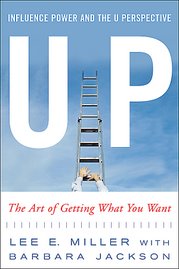
UP: Influence Power and the U Perspective-- The Art of Getting What You Want
Showing posts with label Career Change. Show all posts

Tuesday, January 22, 2008

On-Ramping: Successfully Returning to Work After Take Time Off From Your Career

CAREER COACH

Sunday, January 20, 2008

Kristen Lyle, an audit manager for KPMG, a national accounting firm with offices in New Jersey, left her field when her second child was born. After several years, she decided it was time to return to work. While Lyle had maintained her license, she never considered going back to work as an accountant. She hadn't stayed current with developments in her profession, and she assumed an accounting firm would not want to hire someone who had been away for several years.

Lyle had come face to face with the twin demons that frequently haunt someone seeking to return to the work force: lack of confidence and lack of currency.

When Lyle mentioned to a friend from her old firm she was considering changing careers, her friend spoke with a manager at KPMG and the firm hired her back, with the same title and responsibilities she had when she left. They also provided her with the training she needed to get up to speed, and have been supportive of her need to balance work and family.

How difficult is it to return to work after taking time off for an extended period? The answer depends on whom you ask. It also depends on how you approach the task. It has become so commonplace for people to take time off from their careers there are terms to describe the process: off-ramping, which means taking a break in your career, and on-ramping, referring to returning to the work force.

Illness, disability and ailing parents as well as family responsibilities can cause many of us to interrupt our careers. For those like Lyle seeking to on-ramp, many will find companies eager to employ them; others, though, will receive a frosty reception.

For someone who has been out of the work force for a period of time, the unspoken question on every employer's mind is: What have you done while you were not working that is relevant to the job we are seeking to fill? Employers will want to assure themselves that, if hired, you will be able to contribute immediately.

Courses taken at local universities or online can demonstrate you have remained interested and active in your profession. Classes that enable you to master new technologies are of particular interest to employers because of the value they place on staying current with rapidly evolving technology. Remaining active in professional organizations and reading professional journals similarly will be looked on favorably. Volunteer work also is an excellent means for someone taking time off to develop new skills and to maintain existing ones.

Here are some other tips for easing the transition:

  • Don't apologize for taking time off, but express enthusiasm for your decision to return to work now. Focus on the skills you bring to the job, the quality of your past experience and what you have done while you were not working that has enhanced your existing skills and helped you develop new ones.
  • Tell everyone you know and everyone whom you have previously worked with you are interested in returning to work and describe the type of job you are seeking. You are most likely to find a job through someone you know.
  • Consider easing your way back into the work force with part-time or temporary jobs. These jobs will allow you to re-familiarize yourself with the industry and update your skills. You also could start your own business from home. That could turn into a full-time occupation, or it could serve as a jumping-off point to re-enter the work force.

The notion that a person will spend their whole career with a single company moving up the career ladder seems as anachronistic today as the local malt shops we see on TV Land reruns.

Many of us will find ourselves taking time off from our careers for a variety of reasons. A little planning will go a long way toward ensuring your time off is little more than a short detour on your way to a fulfilling career. Never assume an employer won't want to hire you or won't be willing to accommodate your needs.

A veteran human resources executive, Lee E. Miller is the author of "UP: Influence Power and the U Perspective -- The Art of Getting What You Want," and the co-founder of YourCareerDoctors.com, a Web site devoted to career success. Mail questions to Lee@YourCareerDoctors.com.

Sunday, January 20, 2008

Pump Up Your Career: Networking Can open All The Right Doors

Allison Brinkman, an account manager with Eisen Management Group, a mid-size Cincinnati public relations firm, credits TV talk show host David Letterman with getting her a new job. When she graduated from college, Brinkman faced the challenge of finding her first job. Asked during a job interview what she could bring to the company, she responded with a prepared Letterman-style Top 10 list, ending with the No. 1 reason for hiring her: that "she wouldn't stop bugging him until he gave her the job." That tenacious approach got Brinkman hired.

Employers are too busy to waste their time interviewing unqualified candidates. What gets someone hired is that they are more likable, fit in better with the corporate culture, wow the interviewer with some particular success or simply focus more on what is important to the person making the hiring decision.

Before you can bowl over the interviewer, however, you have to get in the door. Most people miss out on great jobs because they are never even in the running for those positions. It is unlikely you are going to get your next job by posting your résumé on the Internet or searching the job boards.

According to the United States Department of Labor, less than 10 percent of job seekers find employment by replying to Internet postings. Moreover, the job you really want is unlikely to be posted on the Internet.

The best way to find a good job is still through the people you know, says Paula Marks, an executive recruiter at Gilbert Tweed Associates, a national executive search firm with offices in New Jersey. The key to finding a new job is networking, she says. "Networking should begin in utero," she adds jokingly.

The people you know are the ones who will alert you to that great job, and will introduce you to people in a position to hire you. The more people you know, and the more people who think highly of you, the more likely those things will happen.

Neil Gussman, Communications Manager at the Chemical Heritage Foundation in Philadelphia, got his last three jobs through the network of sales representatives he has dealt with over the years. “Sales representatives know which companies are hiring and where the best places to work are. They have to be in the know to be good at their job," Gussman says.

Networking is not just for people to whom meeting others comes naturally. Anyone can learn to network. Nancy Ancowitz, a business communication coach and creator of Self-Promotion for Introverts, a program designed to teach shy individuals how to promote their careers and their businesses, advises people to build their network by joining professional organizations, heading committees, volunteering, hosting events and writing articles on topics of interest in trade magazines and on the Internet. Instead of collecting business cards at networking events, she suggests "focusing on making one or two strong connections with people of interest to you."

"Give to your network without worrying about what you are going to get back," she suggests. Introduce people even if you've just recently met them, and tell them something they may have in common -- "I understand you're both big Nets fans." You'll be viewed as a connector, which will make people want to stay in touch with you. Most importantly, "don't wait until you need a job to begin networking," Ancowitz says. "Build relationships, and be generous with people in your circle throughout your career. That way when you need them people will be there for you."

Never underestimate the power of building relationships and being likable when it comes to getting a job. Eva Rosenberg, an accountant and the author of "Small Business Taxes Made Easy" (McGraw Hill; 2004), got her first job as an executive recruiter despite having to win over a boss who had never hired a female recruiter before, and who did not want to pay her what she was seeking. Rosenberg's persistence, likeability and positive attitude finally got her an interview. Although her prospective boss was not initially inclined to hire her, she got the job by making a deal with him. She bet him she could close one placement before the end of her first month. If not, she agreed she would leave and pay him back her first month's salary. At the end of the first month, she had made not one, but two placements, and the job was hers.

Lee E. Miller is the author of "UP: Influence Power and the U Perspective- The Art of Getting What You Want" and co-founder of YourCareerDoctors.com, a Web site devoted to career success. During his more than 20-year career as a senior human resources executive, he has hired and promoted hundreds of employees. Send your career questions to Lee@YourCareerDoctors.com