Latest Book

Latest Book
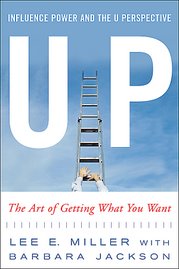
UP: Influence Power and the U Perspective-- The Art of Getting What You Want

Sunday, April 27, 2008

Don't Make These Job Search Mistakes

Sunday, April 27, 2008

Before John Yocca found his current job, he had been unemployed for seven months. Unexpectedly laid off as part of a major downsizing, Yocca took some time off trying to figure out what he wanted to do.

Now a senior account executive with Stern and Associates in Cranford, Yocca eventually found temporary work in the golf industry, a passion of his, and began exploring the possibility of working full time in the field. After a while, though, Yocca got discouraged and decided to go back to what he knew best. So, he reached out to a recruiter he had worked with in the past.

By coincidence, the recruiter was working on a search for which he was particularly well-qualified. Within a day, Yocca had an interview; a week later, he had a job. In hindsight, Yocca says he wishes he had pursued his job search more diligently and reached out to his network much earlier.

With the economy losing 80,000 jobs in March, the third consecutive month of rising unemployment, many more people are likely to be facing a period of unemployment in the coming months. Some of those affected may find themselves out of work for an extended period of time. Should you find yourself among the casualties of what will hopefully be a brief economic downturn, avoid the common mistakes that can unnecessarily lengthen the time you look for work.

The most common problem for individuals who have been looking for a job for an extended period of time is "they get discouraged and lose their confidence," said Julie Kampf, president of JBK Associates, an executive recruiting firm in Engelwood. This can lead them to interview poorly and make bad decisions, such as accepting the wrong job out of fear nothing else will come along.

Here are some mistakes to avoid during a job search:

  • Don't wait to begin the job search. While trying to determine what you want to do next and not simply jumping at the first job that comes your way is a sound strategy, taking a long vacation is not. A few days off to clear your head and re-energize is fine, but then get to work. The sooner you start, the sooner you will find that next great opportunity.
  • Don't apologize for the time you have been unemployed. Let your potential employer know you have been focused on finding the right job and be able to describe the efforts you have made to do so.
  • Don't take rejection personally. Human resources professionals and executive recruiters are bombarded by résumés, e-mails and faxes from candidates. If they don't get back to you, be persistent, but don't be a pest. Finding a job is a "numbers game." The more opportunities you pursue, the better your chances.
  • Don't be embarrassed to ask your friends and business associates for help. "Those are the people who know you best and are the most likely to help you," says Kim Bishop, vice chairman of the national recruiting firm Slayton Search Partners, who is responsible for the firm's New York-New Jersey region.
  • Never stop networking. Reach out to your contacts on a regular basis, whether that means just checking in to say hello once a month, forwarding articles of interest or simply sending a birthday or holiday card.
  • "Objects in motion tend to stay in motion, while objects at rest tend to stay at rest, unless acted upon by an external force," says Newton's First Law of Motion. When it comes to finding a job, a similar principle comes into play. Employers are interested in people who are active and involved. They want to know you are positive, motivated and energetic. They are looking for someone who has been busy, even while engaged in a job search.

    So while you are looking, take courses that will enhance your skills, get involved in professional organizations and engage in volunteer work. This will not only expand your network, but will demonstrate you have been productive during the time you have been out of work. Consulting or freelance work also can be a plus, as long as it doesn't keep you from focusing on your primary objective of finding a job.

    The biggest mistake you can make when you are unemployed is to "rely on someone else to find you a job," Kampf says. People in your network, career coaches all can help you. They can offer ideas, provide leads and give you advice, but ultimately, you have to take responsibility for your own job search.

    A veteran human resources executive, Lee E. Miller is the author of "UP: Influence Power and the U Perspective -- The Art of Getting What You Want," and the co-founder of YourCareerDoctors.com, a website devoted to career success. Mail questions to Lee@YourCareerDoctors.com.

    Sunday, April 6, 2008

    Make Yourself a Perfect Match

    Sunday, April 06, 2008

    When I was a young associate at a law firm, one of the pleasant tasks assigned to us was taking law students who were interviewing for jobs out to lunch. This was an opportunity for the firm to have the candidate's contemporaries sell them on the virtues of why they should come to work there.

    On one occasion, several of us were out to lunch with a particularly impressive candidate. He had graduated from Princeton University and Yale Law School. He was smart, articulate and good looking, had excellent experience and seemed like he would fit in at the firm. His round of morning interviews had gone extremely well and our job was to convince him to join the firm.

    Lunch started out uneventful. We talked about sports, law school and life at the firm. We ordered our lunch and several carafes of wine. The conversation was quite animated.

    While we were eating and talking, the candidate reached for something to drink. Instead of his wine glass, he picked up a carafe and took a sip from it.

    I don't remember much else about the lunch, but within 10 minutes of our returning to the office, everyone was talking about the "candidate who drank wine from the carafe."

    While I am sure this outstanding law student had no trouble finding a job, he wasn't offered one by my firm. This incident highlights the importance interviewing plays in the hiring process. One little mistake can cost you a great opportunity.

    No matter how talented you are, your accomplishments do not sell themselves. Knowing how to interview makes all the difference in the world between getting the job you want and getting a letter thanking you for your interest. The good news is interviewing is a skill that can be learned.

    Effective interviewing starts with having the right mindset. It requires an understanding of how employers think and what they are looking for when they interview. To be successful, you have to do more than merely convince the interviewer you are a good candidate for the job.

    Everyone who actually gets an interview probably is a good candidate for the job. Your goal is to convince the interviewer that you, with your work history are the "perfect match" for the specific job they are trying to fill. To accomplish that during your interview, requires not only a positive attitude and enthusiasm for the job, but also an in-depth knowledge of the organization, your prospective boss and the challenges they face.

    That will enable you to emphasize those skills and experience that you bring which will be of particular interest to the employer. Here are some interviewing do's and don'ts that will enable you to stand out from all of the other candidates being considered for the job:

    DO

  • Prepare by finding out everything you can about the company, the job and your interviewer(s).
  • Ask knowledgeable questions.
  • Listen carefully and be responsive to the interviewer's interests.
  • Focus on accomplishments not responsibilities. Emphasize those that are most relevant to the job.
  • Make friends with the secretaries and assistants involved in the hiring process. They are an excellent source of information and assistance.
  • Be positive and enthusiastic at all times.
  • When you finish interviews demonstrate your enthusiasm by asking for the job.
  • DON'T

  • Don't ever say anything negative about a prior employer, even if it is true.
  • Don't interrupt the interviewer.
  • Don't discuss politics or religion
  • Don't be too deferential to the interviewer. Ask questions; take thoughtful positions and support them in a firm but respectful manner.
  • Don't talk about salary. If you must, talk about it as little as possible until you get an offer.
  • The interview is often described as the most critical aspect of the hiring process. It is your best chance to gain an advocate for being hired. Winning over the people who are interviewing you requires understanding what is important to them.

    Although you are the same person with the same skills, experience and accomplishments regardless of who is interviewing you, what you chose to emphasize is up to you. So focus on what is most important to each person that interviews you.

    A veteran human resources executive, Lee E. Miller is the author of "UP: Influence Power and the U Perspective -- The Art of Getting What You Want." He is also the co-founder of YourCareerDoctors.com, a website devoted to career success. Mail questions to Lee@YourCareerDoctors.com.

    Sunday, March 23, 2008

    Don't Let Age Hinder Your Job Search

    Sunday, March 23, 2008

    President John F. Kennedy once said of Walt Rostow, his former deputy special assistant for National Security Affairs, "Walt is a fountain of ideas; perhaps one in 10 of them is absolutely brilliant. Unfortunately, six or seven are not merely unsound, but dangerously so."

    In that statement, Kennedy reminds us good ideas are more important than new ones, highlighting the value of judgment honed through experience. Yet, in a society that seems obsessed with whatever is new, it can be hard to sell the value of hiring an older employee. But there are many things a seasoned worker can do to overcome society's stereotypes and a hiring manager's potential bias.

    "There is experience and then there is diversity of experience," says Thomas Fuller, general managing partner of Epsen, Fuller IMD International Search Group, an executive search firm based in Morristown. The quality of the experience is what matters, he says.

    If you're an older job candidate, focus on your accomplishments, so a prospective employer recognizes what you'll bring to the organization. Describe that experience in a way that matches the business needs of the organization.

    Jack Miller, (no relation to me), author of "Simply Success: How to Start, Build and Grow a Multimillion Dollar Business the Old-Fashioned Way," started a new career at age 69. After selling a previous business to retailer Staples, he became Chairman of Successories, a business-to-business mail-order firm.

    Miller suggests older employees show how their experience will have an immediate effect on a company. He says veterans bring much to the work force: They tend to have a strong work ethic, are less likely to job hop and will not have the challenges of balancing work and the obligations of raising young children, factors that can be pointed out to a prospective employer.

    Here are some other factors that will help older workers land a job:

  • Push past stereotypes that hiring managers have about older workers. Stay energetic, work out regularly and demonstrate enthusiasm for your work. It will go a long way toward getting a prospective employer to view you as an attractive candidate.
  • Demonstrate that you are not only computer literate, but also comfortable with learning new technology.
  • Create a presence on the internet via a personal web page, blog, articles published online or a profile posted on a professional networking website. During an interview, discuss trends in technology that might be relevant to the job you are seeking. This will also eliminate any lingering doubts about your ability to adapt to rapidly changing technology.
  • Do your home work. Most job candidates don't prepare for job interviews and are not sufficiently knowledgeable about the organizations they seek to join, says Milburn resident Brian Drum, who is president of the executive recruiting firm Drum Associates. Displaying your knowledge of a company exhibits your interest and will often impress the hiring manager.
  • A good job candidate "should have at least one significant job accomplishment for each year of employment," Drum says. Concrete examples of how you have successfully made transitions to new situations and stories about how you achieved significant results should give you an edge in the hiring process.

    Employers almost always seek a candidate with relevant experience -- just ask any student seeking his or her first job. Experience, however, does not preclude new ideas. Whether the candidate of experience triumphs over the candidate of new ideas, often has to do with how experience is presented.

    Veteran candidates wishing to be selected ahead of talented younger prospects should demonstrate to a potential employer that they can apply their experience in a rapidly changing business environment.

    A veteran human resources executive, Lee E. Miller is the author of "UP: Influence Power and the U Perspective -- The Art of Getting What You Want," and the co-founder of YourCareerDoctors.com, a website devoted to career success. Mail questions to Lee@YourCareerDoctors.com.

    Saturday, March 15, 2008

    GETTING AHEAD BY UNDERSTANDING THE PEOPLE YOU NEED TO INFLUENCE


    What determines why one person is selected for a job or a promotion and another is not? Most people believe that the answer to that question lies with the qualifications of the individuals being considered. If, like most people, you answered that the candidate with the most relevant skills and experience gets the job, you would be wrong. If someone is able to obtain a job interview or is being considered for a promotion, they are likely to be qualified to do the job. However, so are all the other candidates being considered for the position. The key to being selected is to distinguish yourself from all of the other qualified candidates.

    Standing out from the crowd has more to do with your understanding of the employer’s U Perspective than it does with your qualifications. An employer’s U Perspective is ‘what they care about.” Employers are not looking for the candidate with the best qualifications because there is no such thing as the “best qualified candidate” in the abstract. There is only the best candidate for a particular job as the person or persons making the decision see it. To show that you are the right person for the position you are seeking requires understanding the U Perspective of the people involved in making the decision to hire or promote you.

    While in most organizations there are a common set of shared values referred to as the organization’s culture, you don’t interview with an organization. You interview with individuals. For most jobs, you will have to interview with more than one person. Each person who interviews you sees the job somewhat differently. They define the perfect candidate as the perfect candidate for them. To convince an interviewer that you are the right person for the job, you need to figure out what the interviewer cares about.

    How each person defines that ideal candidate usually can be found in the answer to the question “What can this candidate do for me?” Individuals tend to see the answer to that question differently depending on their role in the organization. Someone from Human Resources will have a different U Perspective than someone in Finance and both will differ from what your future boss will be looking for in a job candidate.

    Typically a Human Resources executive is looking for the obvious choice -- someone who will be readily accepted by everyone involved. That way the Human Resources executive can fill the position quickly, satisfy his or her clients and move on to other work. He or she also needs to be able to the articulate reasons why you are the best candidate for the job. If a candidate has all the right skills and experience, and fails, no one will blame the Human Resources executive for recruiting someone who was clearly wrong for the job. On the other hand, if that individual favors someone who doesn’t fit the job specifications’ exactly, even if the candidate is otherwise outstanding, and it doesn’t work out, the Human Resources executive is likely to face criticism. So, when you interview with a Human Resources executive demonstrate how you meet all the important qualifications for the job. Be prepared with specific examples of things that you have done in the past that relate to the types of problems the company is currently facing.

    Sometimes a Finance executive will be involved in the hiring process. What is their U Perspective? The Finance executive wants someone who they will be able to work with -- someone who knows how to stay on budget and help reduce expenses or generate revenues. Those are the skills you want to emphasize if you happen to be interviewing with a Finance executive.

    The hiring manager, your future boss, is looking for someone who can help solve his or her most pressing problems, whatever they are. Even Human Resources and Finance executives will have a different U Perspective when hiring or promoting someone who will work for them than when they are recruiting for someone else. The hiring manager has immediate needs and wants someone to help take care of those needs. Hiring managers are most likely to be focused on whatever they deem to be the most significant problem they face at that moment. They want someone that can have an immediate impact. Therefore, the most important question you can ask your prospective boss is, “What is it at work that keeps you up at night?” The answer to that question will help you determine the hiring manager’s U Perspective. That is what you should focus on. If you can help the interviewer deal with those issues, you have gone a long way toward getting the job.

    While you are the same person, with the same skills, experience and personal qualities no matter who is interviewing you, what you chose to emphasize makes all the difference in the world. Remember each person with whom you interview views the job being filled slightly differently based on how they interact with that position. That is why it is their U Perspective. When you are talking about your ability to do the job, how you are seen by the interviewer depends on what you choose to emphasize. Focus on what is most important to the person interviewing you.

    Thursday, March 13, 2008

    Don't wear blinders about possible layoff

    Sunday, March 09, 2008

    "I should have seen it coming" is a common lament from those who end up laid off as a result of corporate downsizings and restructurings.

    There usually are ample warning signs a layoff is coming, and that you are likely to be among the victims. When faced with that inevitability, though, "a lot of people choose to shut their eyes to the obvious signals," says Susan Ascher, chief executive of the Ascher Group, a human resources staffing firm in Roseland. That can be a costly mistake.

    No one is immune from layoffs. A recent survey of 126 U.S. employers conducted by Mercer Consulting found 33 percent are considering hiring freezes or downsizing. In our rapidly changing world, odds are, sooner or later, most people will find themselves, often through no fault of their own, out of work. So it makes sense to learn how to recognize the warning signs. That way, you will be able to take steps to increase your survival, or be better positioned to deal with losing your job.

    Companies that show signs of financial stress often find it necessary to resort to layoffs. So, if your company is slow paying its bills, is discussing outsourcing of various functions, has discontinued products or lost key customers, is cutting budgets or is the subject of takeover rumors, there is a good chance of a layoff.

    You can reduce your chances of being laid off by getting involved in activities that are critical to the company's future. Keep your skills current, present yourself as someone who goes above and beyond expectations. Whether you will be among the victims of a downsizing depends on many things, some of which are completely outside of your control.

    Walter Sonyi, executive vice president of Gateway International Group, an outplacement firm in Parsippany, offers these key indicators as signs of a layoff:

  • You stop being invited to meetings or being copied on e-mails.
  • Your boss or colleagues avoid looking you in the eyes.
  • When you approach, people stop talking or abruptly change the topic.
  • You are discouraged from joining professional associations or going to conferences.
  • Some of your job duties are reassigned.
  • Your colleagues seem to know more about what is going on than you do.
  • If you think you are likely to be laid off, it is always best to be proactive. While it may already be too late to change the outcome, it can't hurt to try to demonstrate your value.

    The best response, Ascher advises, is to "be visible, be valuable, be positive and be knowledgeable." Make sure your boss knows about your recent successes, increase your visibility on projects viewed as critical to the organization's future and be willing to volunteer to take on added responsibilities. When times are tough, a positive "can-do" attitude is always highly prized.

    Do not, however, ignore the possibility that your fate may already have been sealed. Make a concerted effort to focus on career-sustaining activities you may have let slip due to the press of other responsibilities. They include:

  • Updating your résumé.
  • Staying in touch with your professional network.
  • Increasing your involvement in professional associations and activities.
  • Enhancing your skills and industry knowledge.
  • Getting your finances in order.
  • Being ready to begin a job search if necessary.
  • It is never too soon to start preparing for the possibility that, this time, your number will be up.

    A veteran human resources executive, Lee E. Miller is the author of "UP: Influence Power and the U Perspective -- The Art of Getting What You Want," and the co-founder of YourCareerDoctors.com, a website devoted to career success. Mail questions to Lee@YourCareerDoctors.com.

    Sunday, February 24, 2008

    INFLUENCING THROUGH OTHERS


    Influencing through others can produce impressive results. If presented properly, a message delivered by someone other than yourself carries additional weight. Having someone else exert influence on your behalf is tricky to pull off because it requires understanding, and appealing to, not only the U Perspective· what someone else cares about· of a third person whom you do not have the opportunity to interact with directly but also that of the person who will be delivering the message for you. In addition to having to motivate the person delivering the message you have to make sure that the message they deliver is the one that you actually want to convey. Moreover because you are not there to gauge how people react, you are unable to adjust the message if it does not have the intended effect.

    Sometimes you will want someone else to deliver your message because they have greater legitimacy with the person you are seeking to influence. For example, the Executive Director of a major Non-Governmental Organization ("NGO") was trying to make certain changes in the organization. One of the individuals whose support she needed while giving "lip service" to the proposed changes, she was not doing anything to implement them. The Executive Director did not have direct authority over this individual who was employed by a university that worked with the organization and, despite her best efforts, was unable to gain this person's support. So Barbara Jackson, a well respected consultant and executive coach, was brought into help.

    Barbara was asked to create a strategy for implementing the proposed changes and to develop standards, against which to measure the progress that was being made. By bringing in an expert that had credibility with the organization to develop standards for those individuals working on the initiative, the Executive Director was able to get the resisting individual to do what was required of her. While this individual could ignore the Executive Director, she could not ignore a respected consultant retained with the approval orthe organization's Board of Directors.

    Legitimacy is the aura of authority someone creates when they deliver their message. It adds credibility to the positions being advocated. Because people tend to defer to authority, individuals perceived to have legitimacy are better able to exert influence. Understanding that psychological imperative
    is critical to increasing one's ability to win people over. While there are a number or ways a person can enhance their legitimacy. It is easier, and often more effective. to use someone who already has a great deal of legitimacy with those you seek to influence. That is why experts are brought in to help persuade.

    People with whom someone has had previous positive dealings, people in positions of power, people with recognized expertise, celebrities, as well as individuals perceived to have a certain status, all carry legitimacy. Selecting the right person to deliver your message can insure that it produces the desired results. In addition to using credible individuals to leverage the power or your message, sometimes you need to exert influence through someone else simply because you cannot be everywhere and do everything yourself. When you are busy or seeking to persuade someone that resides a great distance away it is often necessary to influence through someone else. Perhaps you will choose to do so through a person that works for you, a local agent or someone who works in your organization at a nearby location.

    When you seek to substitute someone for you that has not been selected because they already have legitimacy, you need to provide a reason for people to want to work with that individual. If that person's position is the same level as yours or at a higher level, that will probably be sufficient. If not, however, you will need to promote your designee as an expert in some aspect of the transaction so as to confer sufficient status to encourage people to want to work with him or her. Otherwise they will wonder why you are not dealing with them directly. It is essential, moreover, that you keep checking in with your representative to ensure that he or she is proceeding in the right direction. Once you have conferred sufficient status on that person it is virtually impossible for them to change their position once they make a commitment without threatening the relationship.

    Working through others is an approach to influencing that can be used with great success in a variety of different circumstances for an assortment of reasons. How best to exert influence through others, depends on the reason why you are doing so. Properly utilized, however, influencing through others is one of the tools that every executive should have in their arsenal.

    Monday, February 18, 2008

    Want to be Found; Create An Internet Presence

    Sunday, February 17, 2008

    Yogi Berra, former Yankee great and longtime Mont clair resident, once commented about a particularly popular restaurant: "Nobody goes there anymore. It's too crowded." The same might be said of how the Internet is generally used to find jobs.

    Most people use the Internet when they are actively seeking a new position by searching listed job openings or by posting their résumés on various job boards, such as Monster.com. Individuals do, in fact, find jobs that way.

    Although, according to the Department of Labor, the number who do amount to less than 10 percent of job seekers, it doesn't hurt to use those job boards unless you are concerned your current employer might find out. Because Internet job postings usually result in employers having to sort through large numbers of responses from unqualified candidates just to find a few qualified individuals to consider, recruiters have started using the Internet in other ways.

    Recruiters, like Jill Krumholz of Charleston Partners in Rumson, are using the Internet to identify the best candidates for open positions, including those who may not be looking for a job at the moment. Recently, for example, she was conducting a search for a senior benefits professional at a large global technology company.

    "The first thing I did was to Google the term 'global benefits conference,'" Krumholz said. By looking at the conference presenters, she was able to identify several candidates for the position. After doing further research, she contacted a few of those individuals and was able to find a well-qualified candidate to present to her client.

    To take advantage of these recruiting trends, savvy careerists are creating an Internet presence instead of just looking for a new job on the Internet. That means the next great job opportunity, and the people who can help them get it, will find them. In that way, their names will pop up when recruiters and prospective employers are looking to fill a position for which they would be appropriate, even when they are not actively in the market.

    That Internet presence starts with an online profile, one that describes who you are professionally. Web sites such as myspa ce.com and facebook.com allow you to post profiles that are both social and professional, while oth ers like linkedin.com focus only on professional profiles. In addi tion to helping those seeking to fill positions discover you, having a professional profile online facilitates networking with other professionals.

    Be certain that wherever someone finds you on the Internet, what they see portrays you in the way you want to be de picted.

    "Employers are now routinely running Web searches of candi dates' names and all known e- mail addresses before they consider someone for a promotion or a new job," says Lena West, author of the e-book "The Blogos phere Cluebook" and chief strategist at XynoMedia Technology, a Westchester, N.Y., firm. "They want to see how you represent yourself online."

    West advises: "While photos of your family are acceptable on social (but not on professional) net working sites, pictures of you drinking with your friends or with body paint at the Giants game are not."

    There are a number of ways to increase your professional stature on the Internet beyond posting a profile:

  • Use the Web to develop a business network for yourself by joining professional organizations and participating in online discussions of topics on their Web sites. Offer insights on the impor tant issues facing your profession. Ask and answer questions. Offer help to others where appropriate.
  • Have something to say that is insightful about the industry online. Write a blog that comments on current issues facing your industry. If you don't have the time to write a blog, write comments on the blogs of others in your field. You can also answer industry-related questions on Web sites that post questions, such as "Yahoo! Answers."
  • Write reviews on Amazon.com about books being read by people in your field.
  • Laurie Murphy, chief executive of PeopleAreKey, an executive search firm in Cranford, says "passive candidate-recruiting techniques" are now commonly used by recruiters to identify job candidates. This includes using search engines like Zoomin fo.com, which pulls together information about individuals from Web sites across the Internet.

    With companies reducing hir ing in anticipation of a tougher economic climate, it is even more important today to create a Web presence. Once the economy starts to improve, there will be a need to fill jobs quickly. Having your name appear where people doing the hiring are likely to look is important if you want to be found.

    A veteran human resources executive, Lee E. Miller is the author of "UP: Influence Power and the U Perspective -- The Art of Getting What You Want" and the co-founder of YourCareerDoctors.com, a Web site devoted to career success. Mail questions to Lee@YourCareerDoctor s.com.