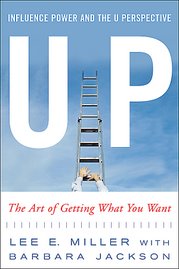
Latest Book

Latest Book
UP: Influence Power and the U Perspective-- The Art of Getting What You Want
Showing posts with label Layoffs. Show all posts

Thursday, March 13, 2008

Don't wear blinders about possible layoff

Sunday, March 09, 2008

"I should have seen it coming" is a common lament from those who end up laid off as a result of corporate downsizings and restructurings.

There usually are ample warning signs a layoff is coming, and that you are likely to be among the victims. When faced with that inevitability, though, "a lot of people choose to shut their eyes to the obvious signals," says Susan Ascher, chief executive of the Ascher Group, a human resources staffing firm in Roseland. That can be a costly mistake.

No one is immune from layoffs. A recent survey of 126 U.S. employers conducted by Mercer Consulting found 33 percent are considering hiring freezes or downsizing. In our rapidly changing world, odds are, sooner or later, most people will find themselves, often through no fault of their own, out of work. So it makes sense to learn how to recognize the warning signs. That way, you will be able to take steps to increase your survival, or be better positioned to deal with losing your job.

Companies that show signs of financial stress often find it necessary to resort to layoffs. So, if your company is slow paying its bills, is discussing outsourcing of various functions, has discontinued products or lost key customers, is cutting budgets or is the subject of takeover rumors, there is a good chance of a layoff.

You can reduce your chances of being laid off by getting involved in activities that are critical to the company's future. Keep your skills current, present yourself as someone who goes above and beyond expectations. Whether you will be among the victims of a downsizing depends on many things, some of which are completely outside of your control.

Walter Sonyi, executive vice president of Gateway International Group, an outplacement firm in Parsippany, offers these key indicators as signs of a layoff:

  • You stop being invited to meetings or being copied on e-mails.
  • Your boss or colleagues avoid looking you in the eyes.
  • When you approach, people stop talking or abruptly change the topic.
  • You are discouraged from joining professional associations or going to conferences.
  • Some of your job duties are reassigned.
  • Your colleagues seem to know more about what is going on than you do.
  • If you think you are likely to be laid off, it is always best to be proactive. While it may already be too late to change the outcome, it can't hurt to try to demonstrate your value.

    The best response, Ascher advises, is to "be visible, be valuable, be positive and be knowledgeable." Make sure your boss knows about your recent successes, increase your visibility on projects viewed as critical to the organization's future and be willing to volunteer to take on added responsibilities. When times are tough, a positive "can-do" attitude is always highly prized.

    Do not, however, ignore the possibility that your fate may already have been sealed. Make a concerted effort to focus on career-sustaining activities you may have let slip due to the press of other responsibilities. They include:

  • Updating your résumé.
  • Staying in touch with your professional network.
  • Increasing your involvement in professional associations and activities.
  • Enhancing your skills and industry knowledge.
  • Getting your finances in order.
  • Being ready to begin a job search if necessary.
  • It is never too soon to start preparing for the possibility that, this time, your number will be up.

    A veteran human resources executive, Lee E. Miller is the author of "UP: Influence Power and the U Perspective -- The Art of Getting What You Want," and the co-founder of YourCareerDoctors.com, a website devoted to career success. Mail questions to Lee@YourCareerDoctors.com.

    Friday, July 27, 2007

    Layoffs for Employees, Dividends for Investors

    So read the headline of an article recounting the quick turnaround of a recent private equity investment. Much of that quick profit came as a result of a 10% cut in the company's workforce. I spent much of the 1990s watching the LBO cycle play itself as a senior human resources executive who had the unenviable task of firing lots of people. Never an easy thing to do. However, I am not going to write about how unfair it might be to the individuals involved. It is. Most of them did their jobs, worked hard and cared about the companies they worked for. However, the world changed around them. Private equity firms merely speed up the process.

    We are repeating the cycle we went through in the 90s. Thanks to ever improving technology I anticipate this trend will not only continue but will accelerate. As a result no matter how hard you work and how good you are at what you do, your job is always at risk. New boss, merger, private equity buyout- all have job ending potential.

    What can you do to protect yourself. Always make sure that you keep learning new skills. Stay current on what is happening in your field and in your industry. Develop a network of friends and colleagues that you can count on. Help them whenever you can. Most importantly, always have a plan ready to find a new job. If you lose your job, and statistically that is highly likely, you need to be ready.

    The good news is (and there is good news), most people who change jobs, or careers, are happier after they do so. Often they are thankful that they were laid off because it forced them to do something they were thinking about doing but were afraid to do. Okay that perspective comes with hindsight only. Getting fired is painful, scary and really, really difficult. That is why it is best to prepare for it beforehand or, if you are unhappy where you are, be proactive and find something better before you are faced with the prospect of being let go.

    Let me leave you with one final thought: When I was a lawyer I never imagined ever doing anything else. For business reasons I was transferred by my firm to another city and shortly thereafter, for reasons of geography, I took an HR position with one of my clients. Surprisingly I liked that work even more. After a long career in HR at several companies, after a takeover I took some time off to write a book, teach and start a corporate training and consulting firm. Surprisingly I liked that even better and felt really good because I was helping people. Each of those transitions was not without their challenges. However, I survived and prospered, leaving me to preach what has become my basic life philosophy- "There are no limits on what we can accomplish except those we place on ourselves." Remember, from the vantage point of doing something you love the view around you is always pretty good.