Latest Book

Latest Book
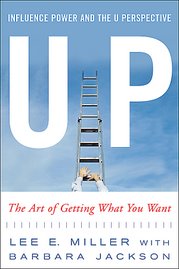
UP: Influence Power and the U Perspective-- The Art of Getting What You Want

Friday, September 19, 2008

How to Make Them Forget Your Age


Sunday, September 07, 2008


Here is a letter from one of our readers seeking advice on a common concern: How to avoid having age hurt your chances of getting the job you want.


I am in my 50s. I recently started a job hunt after moving because of family obligations. I have had several interviews, but after what I thought were good interviews, there was no further contact from the employer. I have contacted one employer several times to try to get a second interview but with no suc cess. Do you think it is my age? If so, what can I do for future interviews to downplay my age?


Without knowing more about your specific situation I cannot say whether or not age is affecting your job search. While it is illegal to consider age in determining whether or not to hire someone, age sometimes can be a factor in a job search.


Employers generally value experience, so age only is viewed negatively if you don't take steps to ensure that it is not seen that way. There are several things you can do to minimize the risk that age will hurt your chances of being hired.


Since you can't get hired unless you get an interview, start by making sure your résumé is "age neutral." Rewrite your résumé, so nothing indicates how old you are. For example, list your degrees, but do not include years of graduation. While you should list the dates of employment when you are describing your work history, only list your most recent job history going back approximately 10 to 15 years. If you have other important work experience, list it under a section titled "Other Relevant Experience," and do not include the dates relating to that experience.


Whether your age will actually play a role in the hiring decision, how you interview will be determinative. If you do a good job in the interview, age is unlikely to hurt your chances of being hired.


Appearance is important. If you look and act old, then that is how you will be perceived. Go out of your way during the interview to be energetic and positive. Make sure you are in good physical shape and be contemporary but appropriate in the way you dress.


Don't dress like you are 20 years old, but don't wear the same styles you wore 20 years ago. Join a gym, get a new hairstyle and buy some new clothes. Get the best clothes you can afford and make sure they are well tailored.


Most important, make sure you stay current with technology. That is the one aspect that concerns businesses when they are hiring older employees. Employers generally want to hire individuals who understand, and can adapt to, changing technology.


If you can demonstrate to a prospective employer that you are comfortable with technology, age will not likely be an issue. Take courses if you need to up date your familiarity with computers. Demonstrate that you are at home on the internet. Create a professional online presence. Understand terms like social networking. Have an online bio, write a blog and have your own web page or web résumé. Write professional articles and have them published online.


Here are some tips to help you eliminate age as a factor in your job interviews.


  • Prepare: Find out everything you can about what the organization is currently doing, the challenges they face, the job and the interviewer.

  • Make your experience a plus by focusing on what you have done that will be valuable to your prospective boss.

  • Ask knowledgeable questions.


  • Demonstrate that you are comfortable with technology.


  • If you are asked about something that you don't know how to do, confidently express your willingness and ability to learn how to do it.


  • Don't ever say anything negative about a prior employer, even if true.


  • Smile.


  • Pay careful attention to how you dress -- contemporary but appropriate to the industry.


  • Always be positive and en thusiastic.


  • Tell the interviewer that you want the job

Effective interviewing starts with having the right mindset. It requires an understanding that employers are seeking positive, enthusiastic employees who can adapt to changing conditions.
They want individuals who have relevant skills that can help them deal with the most pressing issues they are facing. They want employees who are comfortable with technology and are not afraid to learn and try new things. If you can demonstrate that you bring these attributes to the workplace, your age will be the last thing on the interviewer's mind.


A veteran human resources executive, Lee E. Miller is the author of "UP: Influence Power and the U Perspective -- The Art of Getting What You Want," and the co-founder of YourCareerDoctors.com, a Web site devoted to career success. Mail questions to Lee@YourCareerDoctor s.com.

Saturday, September 6, 2008

E-Mail Miscommunications Can Cause Career Damage


Susan Ascher, a provider of contract Human Resources services, describes an e-mail she wrote that nearly derailed a deal with a major client.

After a lot of back and forth by e-mail, the parties had worked out the major issues that they needed to resolve. In response to an e-mail summarizing what had been discussed, Ascher, president of the Ascher Group in Roseland, sent back an e-mail she thought was positive, but which ended with the statement: "As soon as our lawyers review it, I will get back to you." The client called her back almost immediately, very angry at "her dismissive attitude" toward the deal. He said he felt she was being rude when she was merely stating that it was standard procedure to have her lawyer review it before it was finalized.

This highlights the problem with communicating by e-mail. Misunderstandings frequently arise because e-mails lack the visual and auditory cues that give context to our communications when we speak.

The first thing you need to ask yourself before sending an e-mail is whether that is the best way to communicate your message. Sometimes, what you want to say is sufficiently important that it is worth the effort to have the conversation face-to-face. At other times, telephone is the best means of getting your message across.

Even when e-mail is the proper medium, you need to be careful how your e-mails are written. Careers have been damaged because of insufficient attention paid to the drafting of e-mails.

Pamela Harper, president of Glen Rock-based Business Advancement, and author of "Preventing Strategic Gridlock," described some examples of what she referred to as "e-mail self-sabotage," which occurs when people become sloppy about their e-mail sending habits.:

A director in a major corporation sent a rambling e-mail to one of his managers. Embedded in the middle of the communication was an urgent request for action. The recipient not only didn't read the e-mail in time to take the required action, he didn't even notice he was being asked to do something until it was later called to his attention.

An e-mail thread with the subject line "For your information" was sent back and forth without ever changing the subject line. On one of its rounds, the recipient never got around to reading the e-mail even though the e-mail contained an important question that didn't get answered in time for an upcoming meeting.

Here are some e-mail tips to prevent e-mail miscommunications from damaging your career:
E-mails are best used when they are intended to convey facts. Intent is frequently misinterpreted because there is no way to soften the impact of tough words or express nuanced intent through your tone of voice. Humor is frequently misconstrued. That is why emoticons and abbreviations like LOL (laugh out loud) to indicate that you are joking were invented. Use them, or better yet, save the humor for when you are speaking face to face.

Never reply to an e-mail when you are angry. When you are upset about a comment someone makes in an e-mail, wait before responding. Otherwise, you are likely to overreact. Once you write something in an e-mail, you can't take it back. People will read your comments over and over, getting more upset each time. When you write an e-mail, pay close attention to your choice of words and overall tone.

Highlight the points that are important. When you're reading e-mails, read them carefully. When you're writing e-mails, assume the recipients will not do so. Make good use of the caption. Put the most important points in the first paragraph. Limit the length of the e-mails to a few short paragraphs. Bold or underline key points. Do not bury important information in the middle of a lengthy paragraph. Where possible, include visual aids: emoticons, graphs, pictures etc. Don't rely exclusively on e-mails. If you can't resolve an issue with two e-mails, pick up the telephone and call.

E-mails and other virtual communication technologies allow us to extend our sphere of influence, reaching out to anyone when it is convenient for us to do so, no matter where the intended recipient is physically located. Ultimately, however, that technology is only as useful as the user understanding of its strengths and limitations.

A veteran human resources executive, Lee E. Miller is the author of "UP: Influence Power and the U Perspective -- The Art of Getting What You Want," and the co-founder of YourCareerDoctors.com, a Web site devoted to career success. Mail questions to Lee@YourCareerDoctors.com

Saturday, August 23, 2008

Chapter One In Getting Your Book Published


Sunday, July 27, 2008

Here is a letter from the reader mailbag:

I noticed you've written several books. Can you help me with the steps toward publication? Does a book need to be fully written before I seek an agent? I believe our idea is unique; there is nothing like it on the market, and the book would include information that everyone needs, so I am confident it will sell. Do you have any advice about the legwork that needs to be done to get our book published? I don't want to waste time going down the wrong roads as an inexperienced writer. Like Italian Renaissance artist Michelangelo, who believed every stone had a sculpture trapped inside waiting for an artist to let it out, I believe everyone has a book in them. So, I asked an editor and a publicist what an aspiring first-time author should do if he or she wants to get a book published.

Nancy Hancock, executive editor for Rodale Publishing, offers the following advice:

Start with a great idea, one that requires more explanation than a short article on the internet could cover. Coin a catchy phrase that captures the essence of your topic and the imagination of potential readers, such as Daniel Goldman's "Emotional Intelligence" or Stephen Levitt's "Freakonomics."

Spend time developing a following to help sell the book, because getting a book published these days "has as much to do with the author's ability to generate sales as it does with great writing." Publishers want to know "the author has a following." That is understandable since, according to Publishers Weekly, of the several hundreds of thousands of books published each year, the average book in America sells only about 500 copies. So it makes sense publishers want authors who already have an established market for their books.

"Before you even write your book, build a platform establishing your expertise" by writing articles, giving speeches, blogging and networking, advises Annie Jennings, who runs Annie Jennings PR in Princeton.

Even if you are already an established expert and have written a "great" book, you still need to get it to the right publisher. If you are writing a book on investing, you don't want to submit it to a publisher specializing in children's books. Go to your local bookstore and see which publishers focus on books in your area of interest. Literary Marketplace (literarymarketplace.com) is also a good resource for aspiring authors. It provides a listing of publishers, agents, trade services and international resources.

Before you send a manuscript to a publisher, call to find out the procedures for accepting submissions. Sometimes a proposal will be acceptable; others may insist on a completed manuscript.

"If you have built a strong platform, an editor who specializes in your area will probably take a look at your proposal," although some publishers will not accept submissions unless they come from an agent, Hancock said.

Unfortunately, for someone who is neither an established author nor a celebrity, getting a good agent may be just as hard as getting a book published without one. Agents look for authors who are recognizable experts on timely topics, and will be able to help market their books.

If you can't find a publisher, a viable option today is to self-publish. Companies such as Amazon.com and Bookmasters (bookmasters.com) offer services that enable you to publish and distribute books that look professional without a publisher. What you don't get when you self-publish is the editing expertise, marketing power and the status that comes with working with a major publishing house.

It is not uncommon that, if a self-published book sells well, it will be picked up by a major publisher or will attract the interest of an agent. In fact, the best-selling career book "What Color Is Your Parachute? A Practical Manual for Job-hunters and Career-Changers" was originally self-published.

Whether getting a book published or moving your career forward, success depends on the same three qualities: believing in your work, being creative and never giving up. When my first book, "Get More Money on Your Next Job," was published, I got a contract based on the table of contents and one chapter. Because I didn't know it wasn't done that way, I simply used my network of friends to identify people they knew at major publishers. Based on those preliminary contacts, without an agent, I was able to sign a book deal with McGraw Hill, which, even in hindsight, was a pretty good deal.

A veteran human resources executive, Lee E. Miller is the author of "UP: Influence, Power and the U Perspective -- The Art of Getting What You Want," and co-founder of YourCareerDoctors.com, a website devoted to career success. Mail questions to Lee@YourCareerDoctors.com.

Sunday, July 13, 2008

Dress for Success, Even in Summer


Sunday, July 13, 2008

Now that the weather has turned hot, we are faced with the mixed blessing of more relaxed dress codes at work.

Even firms that don't generally favor casual dress often allow it during the summer, at least on certain days. When dress is casual, knowing what to wear is not always easy, and mistakes can affect your career.

For example, one warm summer day when C.B. Bowman of North Plainfield was the director of learning and development for a New Jersey-based insurance agency, one of her employees showed up for work in a dress that left little to the imagination. Despite the company's dress code, the employee saw nothing wrong with the outfit because it was an extremely hot and humid day.

Bowman said she sent the employee home to change, pointing out the office was air-conditioned. The employee was eventually fired for other reasons, but Bowman said she thinks this incident served to reinforce the general perception this employee wasn't a good fit for the job.

While rarely does wearing the wrong outfit to work result in being fired, how a person dresses can have a major effect on whether or not he or she is promoted. To be viewed as someone on the fast track to success, one needs to look the part, and not just in the winter, but in the summer as well.

"Management is continuously sizing people up for the next promotion," said Vicky Ribon, Team Manager in charge of the Florham Park office of Administaff, a national human resources outsourcing firm. Potential leaders are judged "not only on their knowledge and skills, but also on their presentation." So always pay attention to the image you project.

Here are some tips for dressing to impress where summer business casual is the norm:

  • Start by looking at the people in the positions you aspire to and take your cues for your summer wardrobe from them.
  • No matter what you choose to wear, make sure you never look sloppy. For men, Glenn Hoffs, fashion director for Brooks Brothers and a South Orange resident, suggests "tropical-weight wool or linen slacks and a long sleeve shirt with the sleeves rolled up, a fashionably casual yet professional look." Polo shirts also work in most industries.
  • For women, "a summer dress is always appropriate as long as it is not too revealing." Tasteful skirts or pants with blouses also can convey the right image.

    As Bedminster-based Dory Devlin, work and money editor for Yahoo Shine and a former Star-Ledger columnist, notes: "It is hard to know the rules, because they are constantly changing as we become increasingly more casual, but there are still some definite office attire don'ts."

  • The two "worst summer workplace fashion offenses" were "visible underwear and tank tops," noted a recent Monster.com online survey. Other summer items that should never be seen on you at the office are halter tops, short shorts, T-shirts and see-through blouses.
  • The human resources professionals I spoke with would all add flip-flops to the list, for both men and women, of what not to wear to work. Leg or toe jewelry also should be reserved for outside the office. My own rule of thumb for business casual is, if it's right for the beach or a hot summer night, it is probably wrong for work.
  • Remember, dress rules are not suspended when you are attending a company function, such as a picnic, barbecue or pool party at the boss's home. No matter how informal, these are still very much business functions. Clothes that are too tight, too short, low cut or see-through are never appropriate.
  • You don't want your boss picturing you in a thong bikini when he or she is deciding who to promote. At a summer get-together, sandals and sneakers have their place, but leave the ripped T-shirts and jeans at home.

    "Think carefully before you wear your favorite T-shirt with the funny or risqué saying emblazoned across the front," Hoffs cautioned. "Not everyone will share your sense of humor."

    The image you present at work is something that should not be left to chance. Every day, individuals miss out on career opportunities because they do not project the right image. Decision-makers, consciously or subconsciously, often consider whether someone looks the part when deciding whether to hire or promote them. The impressions you make during the summer are no less important than those you make during the winter months.

    A veteran human resources executive, Lee E. Miller is the author of "UP: Influence Power and the U Perspective -- The Art of Getting What You Want," and the co-founder of YourCareerDoctors.com, a website devoted to career success. Mail questions to Lee@YourCareerDoctors.com.

    Thursday, July 3, 2008

    If You've Earned A Raise, Then Ask For It


    Sunday, June 29, 2008

    Is the weak economy causing you to hesitate to ask your boss for a raise?

    Ninety percent of employees do not feel this is a very good time to ask for a raise, according to a recent human resources survey sponsored by Randstad, a worldwide staffing agency with offices in Princeton, Parsippany, Swedesboro and Plainfield. The online poll was drawn from a pool of 2,200 employees and 1,295 employers in the United States.

    Most people these days seem to be more worried about keeping their jobs than getting a raise. That can be a costly mistake. The right time to ask for a raise is when you deserve one, regardless of the general state of the economy.

    What do you have to do to get a raise in a tough economy? You not only need to do something that merits a salary increase, but you need to affirmatively promote your accomplishments. Unless you tell them, most bosses don't actually know what you've accomplished, and may even give credit to someone else for your successes. If you want a raise, make sure your boss knows how you have contributed to his or her success and that you can continue to help make him or her look good.

    One way to demonstrate you deserve a raise is to learn new skills or take on greater job responsibilities. Presented properly, your boss will recognize the new skills or additional work being done will make him look good. Particularly in a tight economy, if your boss can achieve greater productivity without hiring additional staff, you can get a raise and your boss can justify it on the basis of saving the company money.

    How you go about asking for a raise is also important. Eileen Habelow, Northeast regional vice president of Randstad, recently gave a bigger raise than she had planned because of the way her employee approached the topic.

    She asked this individual to take over a troubled account and offered him an increase in salary, but the way he responded caused her to rethink the amount she had offered. He told her "he was flattered that she had thought of him for this tough job and was excited by the challenge even though it required him to leave a secure position where he doing extremely well."

    That simple statement reminded her that not only was he the best choice to solve her problem with this account, but also that accepting this position would entail both financial and professional risk for him. So even though she believed he would accept the job at the salary she had initially offered, when he asked for a larger increase she gave him one.

    Prepare carefully before you ask for a raise.You don't simply wake up one morning and ask for one. You have to have a good reason. "I have not had a raise in a long time" is not a good reason, especially in a weak economy.

    "I just completed my MBA;" "I am your top producer;" "I took on additional responsibilities when Sally left;" or "I have a job offer from a competitor." Those are reasons to request a raise.

    Show how you have gone above and beyond what was expected.Use the internet to determine the market value for the work you are doing. Also, recognize the unique value you bring to your employer, those things you do that would be difficult for your employer to replace if you left. Utilize that information to make the case for a raise.

    However, never threaten to leave if you don't get what you are asking for. Doing so will put your boss on the defensive and make it just as likely that she will show you the door as give you a salary increase.

    When you are seeking a raise, bear in mind the advice of Ron McMillan, co-author of "Crucial Conversations: Tools for Talking When Stakes Are High:" "You are not asking for a favor, you are engaged in a business negotiation."

    Demonstrate why you deserve one, explaining how you determined a higher salary is warranted. A salary increase is not the only way you can get a raise. You can also ask for more time off, the ability to work a few days a week from home, additional training opportunities or a bonus based on achieving certain agreed upon results.

    A veteran human resources executive, Lee E. Miller is the author of "UP: Influence Power and the U Perspective -- The Art of Getting What You Want," and the co-founder of YourCareerDoctors.com, a website devoted to career success. Mail questions to Lee@YourCareerDoctors.com.

    Tuesday, June 17, 2008

    Father Knows Best Till Kids Join His Trade


    Sunday, June 15, 2008

    I remember the exact moment when, in our work together, my daughter Jessica stopped being my daughter and became my co-author.

    It had been her idea for me to write "A Woman's Guide to Successful Negotiating: How to Convince, Collaborate and Create Your Way to Agreement." Her idea was to have a negotiating book written from both a male and a female perspective, although Jessica never suggested she be the one to write it with me.

    Naturally, though, I turned to her to be my co-author, not only because she is a gifted negotiator and a successful businesswoman, but also because, after all, the book was her idea.

    We agreed to each draft certain chapters and then critique each other's work. The way this was supposed to work was that we would discuss the proposed changes until we were both satisfied with the result. Initially this process did not go well because, whenever we disagreed, I reverted to the "father role" and exerted my "right" to have the final say.

    She called me about a week after I sent her the first draft of a chapter titled "Negotiating with Your Spouse or Boyfriend." Her response was both unequivocal and totally unexpected. She said, "Dad, you are a genius when it comes to business negotiations but you really do not have a clue when it comes to relationships. Let me take a crack at writing the first draft for this chapter."

    A few weeks later, when I received her draft, it was completely different from what I had written and, frankly, much better. From that point forward, whenever we disagreed, I took her views much more seriously.

    Working with your children can be rewarding for everyone involved, but it also can be difficult. Vinnie Brand, the owner of the Stress Factory Comedy Club in New Brunswick has had all three of his children work with him at one time or another. He warns sometimes a child who works in a family business brings with them a sense of entitlement. They come in late, they do not do their job and generally act as if they can do whatever they want because they are the owner's son or daughter. That attitude can really hurt a business because the other employees quickly come to resent it.

    Peter and Mathew Glazier are a father and son team that runs the Glazier Group, a company that owns and operates a chain of upscale restaurants, including the Strip House in Livingston. Before Peter allowed his son to join the family business, he insisted Mathew "spend some time working elsewhere." That way he "would be able to make an intelligent decision about his future."

    Mathew, who became a lawyer and practiced law for several years before joining his father, agrees with his dad's advice: "Working outside the family business allows children to see how things are done elsewhere and enables them to come into the business with some real world experience that can add value to the company."

    Everyone I spoke with on this topic, though, seems to agree the secret to parents and children successfully working together ultimately boils down to mutual respect. It is important for children to respect that their father or mother created a successful business using methods that worked, even if they are not currently considered the best practices. For the same reason, parents have to accept that things will change when their children join the company.

    Even when you come to respect your children as business colleagues and deal with them as equals, they never stop being your children. Although my daughter is an exceptional negotiator, I do not think it was her extraordinary negotiating ability that enabled her to persuade me to give her 75 percent of the book advance.

    She simply reminded me she had just started a new job in a new city and she needed the money for her new house -- a negotiating tactic that would only work for a business colleague that happened to be your father.

    A veteran human resources executive, Lee E. Miller is the author of "UP: Influence Power and the U Perspective -- The Art of Getting What You Want," and the co-founder of YourCareerDoctors.com, a Web site devoted to career success. Mail questions to Lee@YourCareerDoctors.com.

    Sunday, June 15, 2008

    Cosmetic Surgery's Handsome Rewards


    Sunday, June 01, 2008

    Can cosmetic surgery get you that raise you're looking for?

    Maybe, says a study coming out of the University of Texas.

    Men and women "with below-average looks" suffer "a pay penalty," while those with better-than-average looks receive "a pay premium," according to a University of Texas study. After considering other variables, such as education and experience, the study found someone with below-average looks earned 9 percent less, and a better-than-average looking person earned 5 percent more than an individual with average looks.

    Gordon Patzer, a professor at Roosevelt University who has studied the "physical attractiveness phenomenon" for more than 30 years and is the author of "Looks: Why They Matter More Than You Ever Imagined," says "better-looking people not only earn more, they are also more likely to be hired and to be promoted."

    More and more people seem to be acting on their belief improving their appearance will boost their careers. What many of them are doing goes well beyond just dressing for success. Since 2000, there has been a 27 percent increase in surgical and non-surgical cosmetic procedures, with a large portion of that increase attributable to men. And, according to a 2007 survey by the American Academy of Facial Plastic and Reconstructive Surgery, two-thirds of the men and women surveyed gave as their primary reason for seeking cosmetic surgery "remaining competitive in the workplace."

    Daniel Brock, a studio engineer with a recording studio in Jersey City, opted for hair transplant surgery because he felt his premature hair loss was affecting his business. After a successful procedure, he found he was better able to relate to the younger musicians who are the mainstay of his business. He said he not only attracted a younger clientele, but, overall, his business has increased 35 percent since the surgery.

    Much of the business benefit of cosmetic procedures appears to be psychological. The common refrain from the people I spoke with who had cosmetic surgery, was that they felt more confident and energetic after the procedure. Dr. Antonio Armani, the cosmetic surgeon who did Brock's hair transplant, said one of the reasons his patients often experience increased career success after surgery is "when they look better, they have more self-confidence."

    That self-assurance enables them to perform better. Some experts think attitudinal transformation is more significant than the effects of the actual physical changes in advancing an individual's career.

    In addition to the psychological effect on the individual undergoing the surgery, Patzer notes, "People do, in fact, treat other people differently based on their physical attractiveness."

    Individuals are more likely to believe what people who are better looking say, and are also more willing to help them. Consequently, being more attractive can result in someone being more productive, Patzer says.

    Cosmetic surgery, however, is not a panacea for whatever ails someone's career. In addition to the medical risks associated with any surgery, undergoing cosmetic procedures can be expensive and does not guarantee career success. Moreover, when people are aware you have undergone cosmetic surgery, your career may not fully benefit from the so called "beauty premium."

    Patzer suggests while we value good looks in people, "We don't expect them to have to put effort into it." When someone improves their appearance through cosmetic surgery, "others tend to discount the value of those improvements." Moreover, sometimes the results of the surgery are not what were initially hoped for.

    Whether cosmetic surgery is a better career investment than a new wardrobe, a good haircut or additional training remains to be seen. History is replete with people of only average looks who have achieved great things. Notably absent from the list of Nobel Prize winners and the Fortune list of the world's richest people are any supermodels.

    A veteran human resources executive, Lee E. Miller is the author of "UP: Influence Power and the U Perspective -- The Art of Getting What You Want," and the co-founder of YourCareerDoctors.com, a Website devoted to career success. Mail questions to Lee@YourCareerDoctors.com.