Latest Book

Latest Book
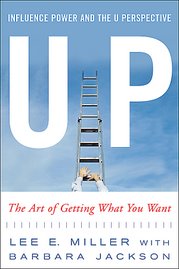
UP: Influence Power and the U Perspective-- The Art of Getting What You Want
Showing posts with label Appearance. Show all posts

Sunday, July 13, 2008

Dress for Success, Even in Summer


Sunday, July 13, 2008

Now that the weather has turned hot, we are faced with the mixed blessing of more relaxed dress codes at work.

Even firms that don't generally favor casual dress often allow it during the summer, at least on certain days. When dress is casual, knowing what to wear is not always easy, and mistakes can affect your career.

For example, one warm summer day when C.B. Bowman of North Plainfield was the director of learning and development for a New Jersey-based insurance agency, one of her employees showed up for work in a dress that left little to the imagination. Despite the company's dress code, the employee saw nothing wrong with the outfit because it was an extremely hot and humid day.

Bowman said she sent the employee home to change, pointing out the office was air-conditioned. The employee was eventually fired for other reasons, but Bowman said she thinks this incident served to reinforce the general perception this employee wasn't a good fit for the job.

While rarely does wearing the wrong outfit to work result in being fired, how a person dresses can have a major effect on whether or not he or she is promoted. To be viewed as someone on the fast track to success, one needs to look the part, and not just in the winter, but in the summer as well.

"Management is continuously sizing people up for the next promotion," said Vicky Ribon, Team Manager in charge of the Florham Park office of Administaff, a national human resources outsourcing firm. Potential leaders are judged "not only on their knowledge and skills, but also on their presentation." So always pay attention to the image you project.

Here are some tips for dressing to impress where summer business casual is the norm:

  • Start by looking at the people in the positions you aspire to and take your cues for your summer wardrobe from them.
  • No matter what you choose to wear, make sure you never look sloppy. For men, Glenn Hoffs, fashion director for Brooks Brothers and a South Orange resident, suggests "tropical-weight wool or linen slacks and a long sleeve shirt with the sleeves rolled up, a fashionably casual yet professional look." Polo shirts also work in most industries.
  • For women, "a summer dress is always appropriate as long as it is not too revealing." Tasteful skirts or pants with blouses also can convey the right image.

    As Bedminster-based Dory Devlin, work and money editor for Yahoo Shine and a former Star-Ledger columnist, notes: "It is hard to know the rules, because they are constantly changing as we become increasingly more casual, but there are still some definite office attire don'ts."

  • The two "worst summer workplace fashion offenses" were "visible underwear and tank tops," noted a recent Monster.com online survey. Other summer items that should never be seen on you at the office are halter tops, short shorts, T-shirts and see-through blouses.
  • The human resources professionals I spoke with would all add flip-flops to the list, for both men and women, of what not to wear to work. Leg or toe jewelry also should be reserved for outside the office. My own rule of thumb for business casual is, if it's right for the beach or a hot summer night, it is probably wrong for work.
  • Remember, dress rules are not suspended when you are attending a company function, such as a picnic, barbecue or pool party at the boss's home. No matter how informal, these are still very much business functions. Clothes that are too tight, too short, low cut or see-through are never appropriate.
  • You don't want your boss picturing you in a thong bikini when he or she is deciding who to promote. At a summer get-together, sandals and sneakers have their place, but leave the ripped T-shirts and jeans at home.

    "Think carefully before you wear your favorite T-shirt with the funny or risqué saying emblazoned across the front," Hoffs cautioned. "Not everyone will share your sense of humor."

    The image you present at work is something that should not be left to chance. Every day, individuals miss out on career opportunities because they do not project the right image. Decision-makers, consciously or subconsciously, often consider whether someone looks the part when deciding whether to hire or promote them. The impressions you make during the summer are no less important than those you make during the winter months.

    A veteran human resources executive, Lee E. Miller is the author of "UP: Influence Power and the U Perspective -- The Art of Getting What You Want," and the co-founder of YourCareerDoctors.com, a website devoted to career success. Mail questions to Lee@YourCareerDoctors.com.

    Sunday, June 15, 2008

    Cosmetic Surgery's Handsome Rewards


    Sunday, June 01, 2008

    Can cosmetic surgery get you that raise you're looking for?

    Maybe, says a study coming out of the University of Texas.

    Men and women "with below-average looks" suffer "a pay penalty," while those with better-than-average looks receive "a pay premium," according to a University of Texas study. After considering other variables, such as education and experience, the study found someone with below-average looks earned 9 percent less, and a better-than-average looking person earned 5 percent more than an individual with average looks.

    Gordon Patzer, a professor at Roosevelt University who has studied the "physical attractiveness phenomenon" for more than 30 years and is the author of "Looks: Why They Matter More Than You Ever Imagined," says "better-looking people not only earn more, they are also more likely to be hired and to be promoted."

    More and more people seem to be acting on their belief improving their appearance will boost their careers. What many of them are doing goes well beyond just dressing for success. Since 2000, there has been a 27 percent increase in surgical and non-surgical cosmetic procedures, with a large portion of that increase attributable to men. And, according to a 2007 survey by the American Academy of Facial Plastic and Reconstructive Surgery, two-thirds of the men and women surveyed gave as their primary reason for seeking cosmetic surgery "remaining competitive in the workplace."

    Daniel Brock, a studio engineer with a recording studio in Jersey City, opted for hair transplant surgery because he felt his premature hair loss was affecting his business. After a successful procedure, he found he was better able to relate to the younger musicians who are the mainstay of his business. He said he not only attracted a younger clientele, but, overall, his business has increased 35 percent since the surgery.

    Much of the business benefit of cosmetic procedures appears to be psychological. The common refrain from the people I spoke with who had cosmetic surgery, was that they felt more confident and energetic after the procedure. Dr. Antonio Armani, the cosmetic surgeon who did Brock's hair transplant, said one of the reasons his patients often experience increased career success after surgery is "when they look better, they have more self-confidence."

    That self-assurance enables them to perform better. Some experts think attitudinal transformation is more significant than the effects of the actual physical changes in advancing an individual's career.

    In addition to the psychological effect on the individual undergoing the surgery, Patzer notes, "People do, in fact, treat other people differently based on their physical attractiveness."

    Individuals are more likely to believe what people who are better looking say, and are also more willing to help them. Consequently, being more attractive can result in someone being more productive, Patzer says.

    Cosmetic surgery, however, is not a panacea for whatever ails someone's career. In addition to the medical risks associated with any surgery, undergoing cosmetic procedures can be expensive and does not guarantee career success. Moreover, when people are aware you have undergone cosmetic surgery, your career may not fully benefit from the so called "beauty premium."

    Patzer suggests while we value good looks in people, "We don't expect them to have to put effort into it." When someone improves their appearance through cosmetic surgery, "others tend to discount the value of those improvements." Moreover, sometimes the results of the surgery are not what were initially hoped for.

    Whether cosmetic surgery is a better career investment than a new wardrobe, a good haircut or additional training remains to be seen. History is replete with people of only average looks who have achieved great things. Notably absent from the list of Nobel Prize winners and the Fortune list of the world's richest people are any supermodels.

    A veteran human resources executive, Lee E. Miller is the author of "UP: Influence Power and the U Perspective -- The Art of Getting What You Want," and the co-founder of YourCareerDoctors.com, a Website devoted to career success. Mail questions to Lee@YourCareerDoctors.com.