Latest Book

Latest Book
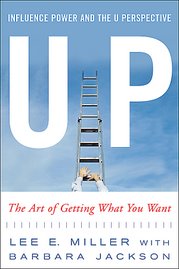
UP: Influence Power and the U Perspective-- The Art of Getting What You Want
Showing posts with label U Perspective. Show all posts

Thursday, January 31, 2008

Influencing without Authority


During the siege of Toulon, a young French officer needed to man an artillery position that was so vulnerable that the soldiers manning the guns had little chance of surviving. So dangerous was the assignment that the officer’s superiors feared his men would refuse to follow an order to take up that position. Instead of invoking his authority to order his men to staff the battery, he chose to place a sign at the fortification that read: “The Battery of the Men without Fear.” Rather than seeking to avoid this dangerous duty, the men in his platoon fought for the honor of manning that post. The young officer who instinctively knew that you could better motivate people by appealing to what they care about than through the exercise of authority was Napoleon, who went on to become Emperor of France and conquer most of Europe.

It is relatively easy to get people to do what you want when you are their boss. Because of your position, your authority, your ability to reward them through salary increases, bonuses and promotions, the people who work for you will usually do what you ask them to do, although they may not do so enthusiastically. What if you are not the boss though? Say you need information from a peer in another department in order to complete an analysis that is due next week or you are seeking to get a client pay an outstanding bill that he is upset about? How do you influence people when you have no authority over them? That is where what we refer to as the “U Perspective” comes into play.The U Perspective allows you to use what other people care about to motivate them.

Most people simply assume that everyone sees the world the way they do. Even when we recognize that someone else may see a situation differently than we do, our first instinct usually is to try to persuade them to see things our way. The U Perspective takes the opposite approach. Its effectiveness is not rooted in the ability to convince others to change their views or adopt different values. Instead, its power comes from recognizing what others already believe and want. The U Perspective allows you to get what you want by working with another person’s belief system, not challenging it.

To influence someone without authority, you need to discover what is important to person you are trying to influence. You need to learn to see things through their eyes. Once you understand how they see a situation you have the ability to construct, and present, options in a way that more effectively influences what they do.Understanding someone’s U Perspective means being able to predict what they will do because they are who they are - given how they have behaved in the past and how they see the situation facing them. Of course, money can be used to get people to do things. Sometimes however you don’t have enough money or the exchange of money would not be appropriate. At other times money simply is not the best way to motivate someone.

People are motivated by many things other than money. Recognition, friendship, a shared purpose, status, time, ease, helping others, fairness, teamwork, family and challenge are all values that you can appeal to when you seek to gain someone’s help or support. Even a desire for fame can be a motivator for some people. What motivates each of us is different depending on the situation and the other people involved. Showing how what you want helps further what the people whose help you need care about, makes it easy to gain their support.


While intellectually we can accept that others may see things differently than we do, it is human nature to believe that our views are correct and that views that differ from our own are somehow less valid. This leads to ineffective, and often counterproductive, efforts to get people to change how they see a situation and what their natural inclinations. Generally, we assume that people who view a situation differently than we do simply do not have as much, or as accurate, information as we have. We believe, therefore, that if only we provide more information or explain our position more clearly, we can change their mind. More often than not they see the situation differently because they have had different life experiences and different training. No amount of additional information will negate how those experiences impact upon how someone evaluates a situation. Training also has a bearing on how we see the world. Engineers tend to look at things differently than do salespeople. Both tend to see things differently than accountants. Taking advantage of the U Perspective also requires getting past our assumption that we know what motivates others - i.e. the same things that motivate us.


Understanding someone’s U Perspective will instruct you as to what you need to do to gain their support. Perhaps you can appeal to friendship with someone with whom you have a good working relationship. Alternatively, the offer of future assistance may suffice with a person that you have helped in the past and who may need your help in the future. A suggestion that you will recognize, by way of an e-mail to their boss, the importance of their contribution to a project or the fear of a similar e-mail from your boss to theirs detailing a lack of support might be enough to carry the day. Influencing without authority starts with understanding all the possible ways you might invoke the things the person you are seeking to influence cares about.

When Lisa Caputo, now an executive at Citigroup, was Press Secretary for then First Lady Hillary Clinton, she appealed to the val­ues of the journalists covering the White House to convince them to respect Chelsea Clinton’s privacy. In early 1993, Mike Myers did a skit on Saturday Night Live making fun of Chelsea who was only thirteen years old at the time. Lisa contacted NBC, but rather than trying to threaten or bully them, she appealed to their U Perspective as parents, “Chelsea is just a kid,’ she said She did not run for office. She deserved as normal a childhood as possible under the circum­stances. That is what you would want for your chil­dren, wouldn’t you?” Although this issue arose peri­odically throughout the Clinton Presidency, by and large, this sort of appeal to their values as parents and as decent human beings worked with the mem­bers of the press. As to Mike Myers, he sent a letter apology and the network basically left Chelsea alone remainder of the Clintons’ years in the White House.

Once you discover someone’s U Perspective, influencing that person’s behavior is a fairly straight forward matter. Unleashing the power of the U Perspective does not require that you share someone else’s values, only that you recognize them and take them into account. While it is extremely difficult to change anyone’s U Perspective, fortunately, you don’t need to do so in order to affect their behavior. What you may need to vary is your approach, depending on what is to each person under the circumstance; that is the only part of the influencing equation that you have complete control over.

Saturday, August 18, 2007

When is a $70 million dollar salary not enough?

When your friends are making $71 million dollars. I was surprised to read in the Wall Street Journal that Mark McGoldrick left a prestigious position at Goldman Sachs running their " Special Situations Group" because he felt that he was working too hard and wasn't being paid enough. The salary he was not happy with, last year amounted to $70 million dollar ($200,000 a day). Most of us won't make $70 million dollar in our lifetime and would be thrilled with a hundredth of that salary. So what makes someone complain about a salary bigger than the gross national product of certain small countries? Fairness, jealousy, envy. Call it what you will but in life we measure happiness not by what we have in some absolute sense, but rather by what we have compared to the people we feel are like us.

So Mark McGoldrick was unhappy with his salary because his counterparts at hedge funds and private equity firms were making a lot more than he was. This should not have come as a surprise to me.

As I wrote in UP: Influence Power and the U Perspective-- The Art of Getting What You Want:" While money can effectively be used as a motivator, even money becomes significantly less useful as a motivator once you achieve a certain level of wealth. There is a significant body of research that shows that once personal wealth reaches a certain level additional wealth produces virtually no increase in one’s sense of happiness. Moreover, according to Richard Layard, a professor at the London School of Economics, peoples’ sense of their own wealth is subjective and is determined primarily by comparing themselves to others. Therefore when incomes rise across a nation there is no greater sense of wealth or happiness. For example, real income in Japan more than quintupled over the thirty years starting in the1950s yet researchers found no corresponding increase in how happy people felt. Even very wealthy people can feel disadvantaged when their friends are significantly wealthier than they are. Understanding that may cause you to propose a business opportunity to a very wealthy individual by focusing on some other benefit beyond just its profitability, such as by making it exclusively available to that individual or by allowing that individual to gain status by being able to offer it to his or her friends."

Understanding that we react in this way and that so do others is important to keep in mind if you are seeking to get hired, to get a raise or to gain a promotion. The fact that someone else is interested in hiring you makes you more valuable. It is not so much the fear of losing you that increases your value. Trust me, they will find someone else equally talented. It is losing you to someone else, especially someone they view as a competitor, that really drives people crazy. We all want what other's want and it is even better if we are the only one, or one of an elite few, that has it. Harness that knowledge to your advantage to move your career forward.